
NC State vs. Duke: Rivals on the Gridiron, Partners in the Economy

Week 3 Recap: Thrillers, Upsets, and Rankings Shake-Ups
Week 3 of the 2025 college football season delivered the type of drama that fuels September Saturdays. Our featured matchup — Georgia vs. Tennessee in Knoxville — lived up to the hype and unfolded almost exactly along the lines we previewed. Tennessee struck quickly with its high-tempo offense, jumping out to an early lead and testing Georgia’s defense. But Georgia regrouped with long, grinding drives that chewed up clock, kept the ball out of Joey Aguilar’s hot hand, and gradually wore down the Volunteers’ depth.
By the fourth quarter, the Bulldogs’ dominance in the trenches tilted momentum, and in overtime Georgia sealed a 44–41 victory on a one-yard touchdown run. Tennessee’s missed opportunities — including a costly field goal miss in regulation — proved decisive. Georgia solidified its place atop the playoff chase, while Tennessee showed it belongs among the elite but still faces questions about finishing big games.
Elsewhere, Week 3 delivered upsets and shake-ups:
- Texas A&M stunned Notre Dame in South Bend, pulling out a last-second 41–40 win that dropped the Irish to 0–2 and sent them tumbling to the back end of the rankings.
- Georgia Tech shocked Clemson with a 55-yard field goal as time expired, handing the Tigers their second loss and pushing them out of the AP Top 25.
- Miami dispatched South Florida in convincing fashion, cooling off one of the season’s early surprises.
- Vanderbilt upset #11 South Carolina on the road, underscoring the SEC’s week-to-week volatility. With back-to-back statement wins, the Commodores have emerged as one of college football’s surprise stories.
- Out west, Oklahoma toppled Michigan in a non-conference clash that reshaped the playoff picture.
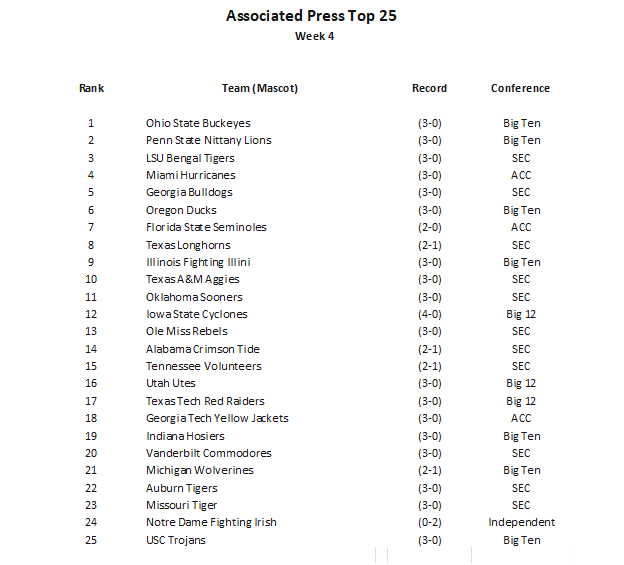
The AP Top 25 reflected the turbulence. Georgia held firm at the top, Tennessee remained inside the top 15 despite the loss, Notre Dame fell to #24, and Clemson dropped out entirely. Miami and Oklahoma surged upward on the strength of signature wins. With the polls reshuffled, the stage is set for pivotal conference matchups — including this week’s feature: NC State vs. Duke.
This Week’s Matchup
One of the best things about college football is that you don’t need a clash of top-ranked teams to find a great game and a great atmosphere. Rivalries, tradition, and local pride often matter just as much. When NC State and Duke meet, it’s more than just another ACC showdown. The Wolfpack, backed by one of the loudest home crowds in the conference at Carter–Finley Stadium, bring a physical style of play rooted in grit and resilience. Duke, revitalized in recent seasons, has leaned on balance and discipline, clawing back into relevance after years in football’s shadows. Matchups like this are often decided not by talent gaps but by turnovers, special teams, and one or two explosive plays that swing momentum.
Duke Football History
Duke football traces back to 1888 and reached national prominence in the 1930s and 1940s under coach Wallace Wade, who left Alabama to lead the Blue Devils. Duke hosted the 1942 Rose Bowl in Durham — the only Rose Bowl ever played outside Pasadena — after security concerns following Pearl Harbor. Oregon State edged Duke 20–16 in that historic contest.
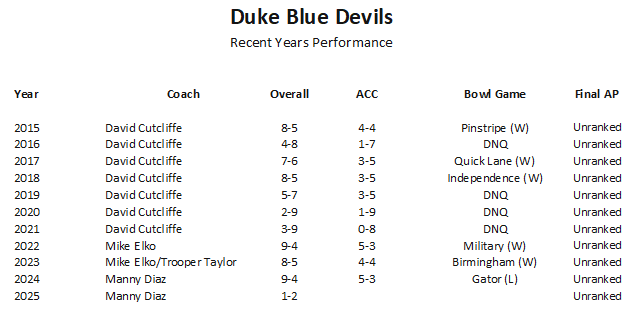
The program has won 17 conference championships, first in the Southern Conference and later as a founding member of the ACC in 1953. Legendary players include Sonny Jurgensen, a Hall of Fame quarterback, and linebacker Mike Curtis, a four-time NFL Pro Bowler. While basketball eventually eclipsed football in national reputation, Duke has reestablished itself in recent years with steady coaching, consistent bowl appearances, and a renewed emphasis on execution.
NC State Football History
NC State first fielded a football team in 1892. After joining the Southern Conference in 1921, the Wolfpack became a charter member of the ACC in 1953. The opening of Carter–Finley Stadium in 1966 marked a turning point, giving the program one of the loudest and most intimidating home environments in the league.
The 1970s brought national attention under coach Lou Holtz, who guided NC State to multiple bowl games, including a Peach Bowl victory in 1972. Since then, the Wolfpack have developed a reputation as one of the ACC’s most consistent disruptors — capable of knocking off ranked opponents and altering the course of a title race.
Over the decades, NC State has also produced a long line of NFL standouts. Philip Rivers, who last played for the Wolfpack in 2003, went on to a 17-year NFL career with the San Diego/Los Angeles Chargers and Indianapolis Colts, retiring as one of the most prolific passers in league history. Russell Wilson, who played at NC State through 2010 before transferring to Wisconsin, became a Super Bowl champion and nine-time Pro Bowler with the Seattle Seahawks and later joined the Denver Broncos. Torry Holt, a star wide receiver who finished his college career in 1998, became an All-Pro and Super Bowl champion with the St. Louis Rams’ “Greatest Show on Turf.” Mario Williams, a dominant defensive end who last played in 2005, was selected as the #1 overall pick in the 2006 NFL Draft by the Houston Texans and went on to multiple Pro Bowl seasons.
More recently, Bradley Chubb, who anchored the Wolfpack defense through 2017, was drafted fifth overall by the Denver Broncos and is now a cornerstone of the Miami Dolphins’ pass rush. NC State has also sent a steady stream of linemen, receivers, and defensive standouts into the NFL, underscoring its status as one of the conference’s most reliable producers of professional talent.
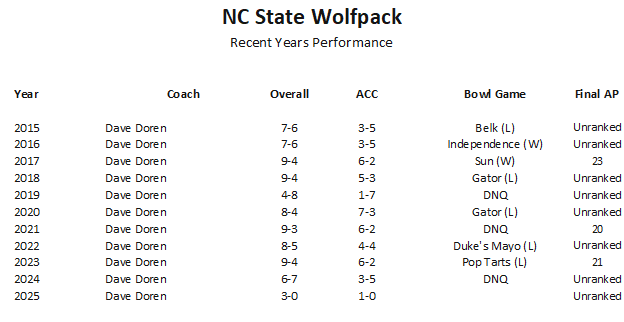
With seven ACC championships and a history of turning out high-impact players, NC State continues to blend tradition with a knack for shaking up the college football landscape.
The Region
Just as their football programs carry distinct identities, so do the cities that host these universities. Raleigh and Durham sit less than 30 minutes apart yet play unique roles in the broader Research Triangle, one of the nation’s most dynamic regions.
Defining the Region
According to the Office of Management and Budget (OMB), a Metropolitan Statistical Area (MSA) is one or more counties tied together by a high degree of economic and social integration around an urban core of at least 50,000 people. When multiple MSAs have strong commuting and economic linkages, they can be grouped into a Combined Statistical Area (CSA).
Raleigh and Durham were once classified together as the “Raleigh–Durham MSA,” but in 2003 the OMB split them into two distinct areas — the Raleigh–Cary MSA and the Durham–Chapel Hill MSA — reflecting divergent growth patterns and commuting flows. Despite the statistical separation, the region is most often referred to as the Research Triangle, anchored by NC State, Duke, and UNC–Chapel Hill. The shorthand “Raleigh–Durham” persists in popular usage, particularly outside the region, though technically it refers only to the Raleigh–Durham International Airport (RDU).
The Birth of the Triangle
The term “Research Triangle” was coined in the 1950s, when state and business leaders sought to diversify North Carolina’s economy beyond agriculture, textiles, and tobacco. They envisioned a research park that would harness the combined strengths of the state’s three major research universities — NC State in Raleigh, Duke in Durham, and UNC–Chapel Hill. With support from Governor Luther Hodges and backing from local business leaders, Research Triangle Park (RTP) was formally established in 1959 on land in southern Durham County.
The early years were challenging. For much of the 1960s, RTP struggled to attract major tenants, and skeptics questioned whether the project could succeed. The turning point came in 1965, when IBM announced it would build a large research facility in the park. That decision validated the concept, attracted national attention, and paved the way for other technology and pharmaceutical companies to follow. From that moment, RTP’s trajectory shifted from an ambitious experiment to a global model for research-driven economic development.
Today, IBM is still a major employer, particularly after acquiring local startup Red Hat in 2019, RTP is home to more than 300 companies, including global leaders in information technology, pharmaceuticals, and life sciences. Located mostly in Durham County and partly in Wake County, it remains the geographic and economic hub of the Triangle, anchoring one of the most dynamic metropolitan regions in the United States.
Raleigh
Raleigh’s foundation is its role as the state capital, ensuring a stable base of government employment. But its identity today is increasingly tied to its growth as a technology and research center. Downtown Raleigh has matured into a vibrant hub of government, finance, and culture, while suburbs like Cary, Holly Springs, and Apex have become magnets for families and professionals drawn by strong schools and modern housing.
Largest Employers: State government, NC State University, WakeMed Health, and SAS Institute, the global analytics software company headquartered in Cary. Cisco, IBM, and Epic Games also maintain major operations tied to RTP. Raleigh is also home to the Carolina Hurricanes NHL franchise, which won the Stanley Cup in 2006 and remains one of the region’s most visible national sports brands.
Recent Announcements: Apple’s much-touted $1 billion campus at Research Triangle Park remains on pause, with timelines pushed back several years and road construction not expected until 2026. While the company maintains its long-term commitment, the project has not yet broken ground. Meanwhile, Raleigh and Wake County have continued to attract steady investment in IT and financial services, though with mixed results. Credit Suisse, once a major RTP employer, has scaled back since its acquisition by UBS, canceling incentive agreements and consolidating operations, while other firms have expanded tech and operations roles in the region.
By contrast, momentum in the life sciences has been far stronger, particularly in Holly Springs. Genentech recently broke ground on a $700 million, 700,000-square-foot facility — its first East Coast manufacturing site — expected to employ 400 people once operational. FUJIFILM Diosynth Biotechnologies has secured a $3 billion, decade-long production agreement with Regeneron and is building out its own large-scale facility, projecting 1,400 jobs by 2031. Amgen has also expanded its footprint, adding another $1 billion to its Holly Springs investment, bringing its total commitment above $1.5 billion and projecting more than 700 jobs within the next decade.
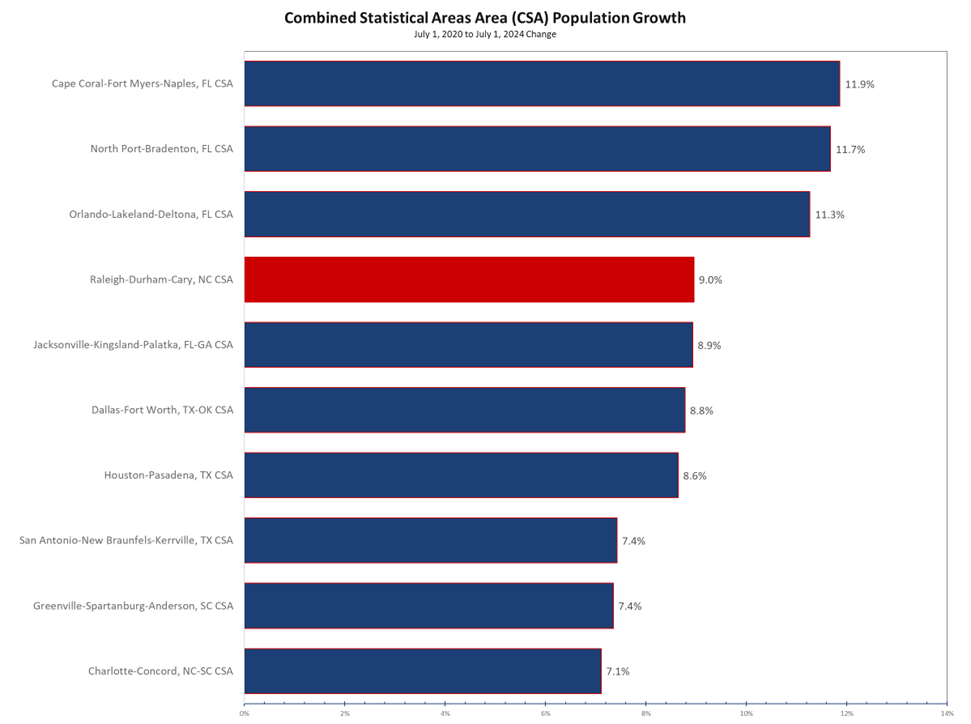
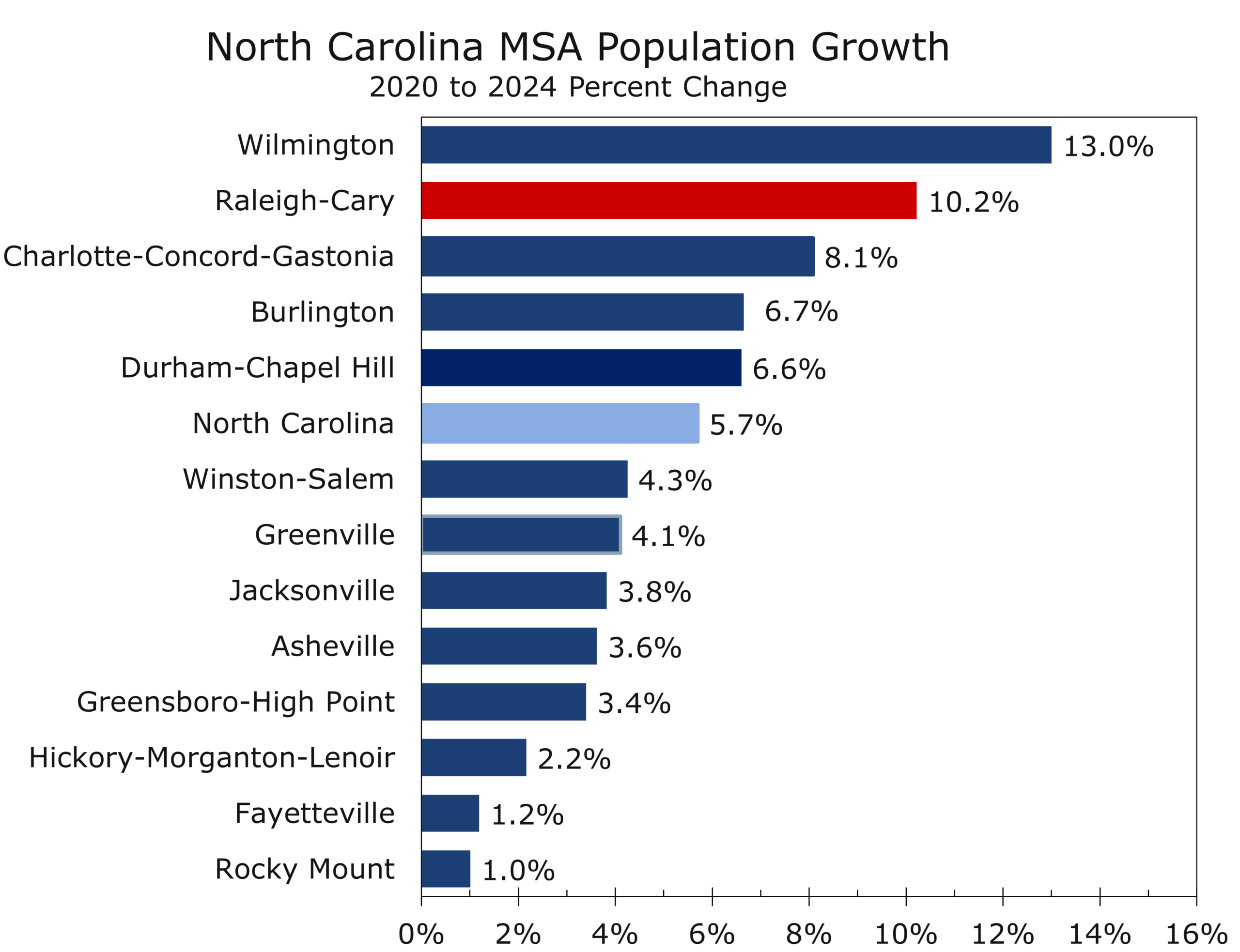
With nearly 500,000 residents, the City of Raleigh has added more than 32,000 people (6.9%) since 2020, making it one of the fastest-growing large cities in the United States. The Raleigh–Cary MSA has expanded to about 1.51 million residents, up more than 10% over four years, while the broader Raleigh–Durham–Cary CSA has reached nearly 2.37 million people, a 5.6% gain.
Raleigh consistently ranks among the top five U.S. cities for quality of life and business climate (Forbes, U.S. News). The metro has also been recognized as one of the best places in America for tech workers and one of the most educated large metros, with nearly half of adults holding at least a bachelor’s degree, which is not surprising given the presence of three large universities in the region and massive health care facilities in Durham and Chapel Hill.
Durham
Durham’s foundation is its role as a university and health care hub, anchored by Duke University and Duke Health, which together employ more than 40,000 people. But the city’s identity today extends far beyond its academic core. Downtown Durham has transformed from a historic tobacco town into a thriving center of startups, restaurants, and arts venues, while surrounding communities such as Chapel Hill, Hillsborough, and the northern suburbs offer a blend of historic charm and modern innovation.
Largest Employers: Duke University and Duke Health dominate the local economy, complemented by major operations from GlaxoSmithKline, Grifols, IBM, and Fidelity Investments. RTP’s growing biotech cluster sits just south of the city, tying Durham directly into the region’s global research ecosystem.
Recent Announcements: Durham has emerged as the Triangle’s clear leader in life sciences. Eli Lilly is investing more than $450 million to expand its RTP campus in Durham County, adding capacity for drug assembly and packaging with operations expected to begin in 2027. Biogen has committed an additional $2 billion to expand its RTP operations, further strengthening Durham’s biotech footprint. Beyond these headline investments, firms like GSK and Grifols are steadily adding research and production capacity, while developers such as Alexandria and Parmer are building out lab space to meet surging demand.
With just under 300,000 residents, Durham has grown by more than 20,000 people (7.5%) since 2020, reflecting steady population gains alongside its economic expansion. The Durham–Chapel Hill MSA now has roughly 690,000 residents, while the combined CSA has reached nearly 2.37 million.
Acclamations: Durham has been repeatedly recognized among the best small U.S. cities for innovation and entrepreneurship, and the Research Triangle has been ranked the #1 life sciences cluster in the South. The city has also been highlighted by The Atlantic and New York Times as one of America’s most livable mid-sized metros.
University Histories & Impact
Duke University
Founded in 1838 as Brown’s Schoolhouse in Randolph County, the institution became Trinity College in 1859 and relocated to Durham in 1892 with support from the Duke family. In 1924, James B. Duke’s endowment transformed it into Duke University, honoring his father, Washington Duke. Today, Duke enrolls about 17,000 students, houses one of the world’s premier medical centers, and is consistently ranked among the top 10 private universities in the United States by U.S. News & World Report.
NC State University
Established in 1887 as the North Carolina College of Agriculture and Mechanic Arts, NC State was created as a land-grant institution under the Morrill Act. It has grown into the state’s largest university, now serving more than 36,000 students. With leading programs in engineering, textiles, and veterinary medicine, NC State is ranked among the top 30 public universities in the nation and is widely regarded as one of America’s most innovative public research universities. Its Centennial Campus integrates corporate partners, research labs, and academic programs, underscoring the university’s role in driving applied research and economic development.
The Broader Impact
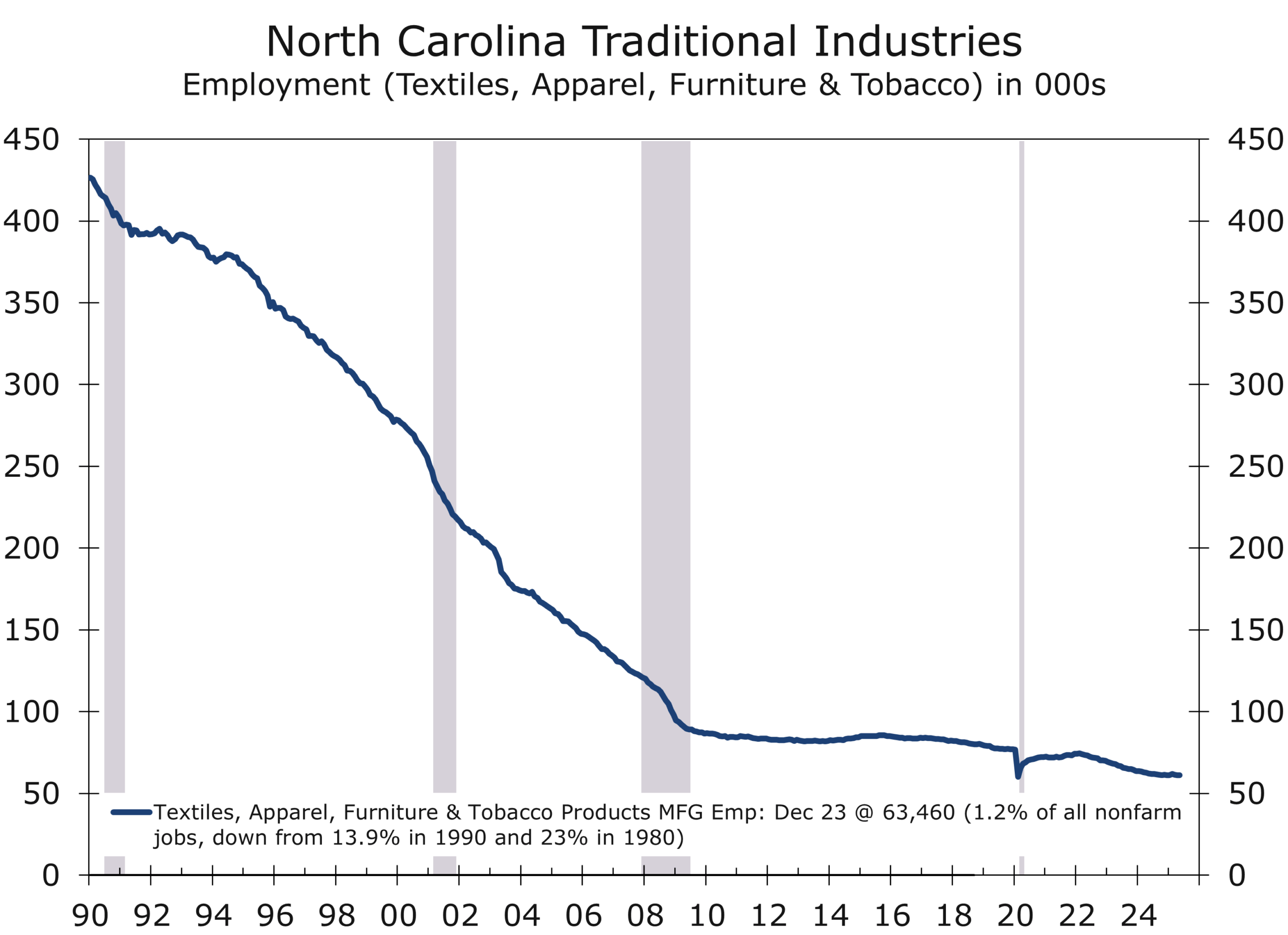
Together with UNC–Chapel Hill, Duke and NC State anchor the Research Triangle, which has reshaped North Carolina’s economy over the past six decades. Once heavily reliant on tobacco, textiles, and furniture, which accounted for 23% of jobs in the state in 1980 but just 1.2% today, North Carolina has diversified its economy into biotechnology, pharmaceuticals, advanced manufacturing, and information technology — sectors that now drive national recognition for innovation and growth. The presence of world-class universities and the success of Research Triangle Park (RTP) have helped make North Carolina one of the most vibrant state economies in the nation, attracting both corporate investment and top talent from around the globe.
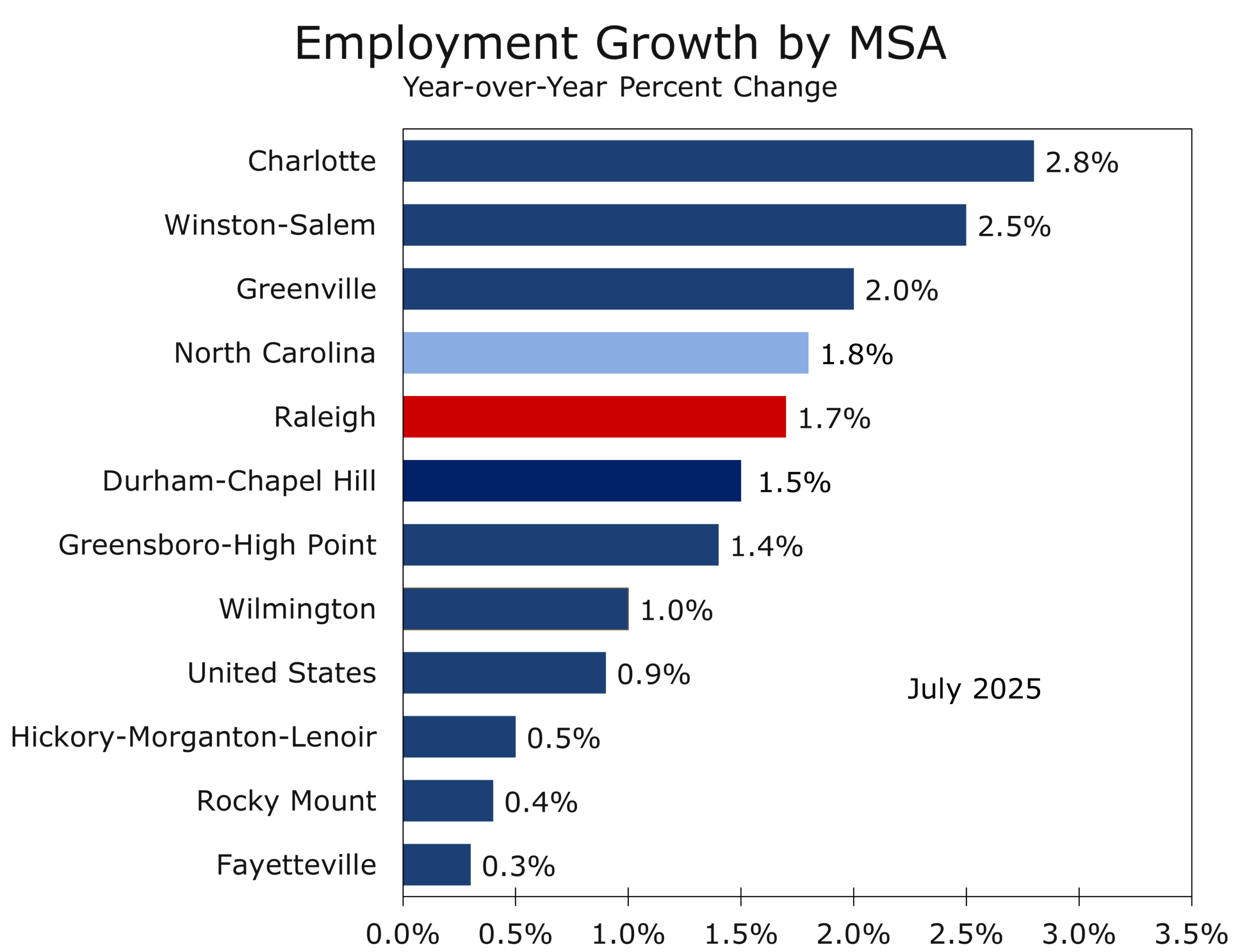
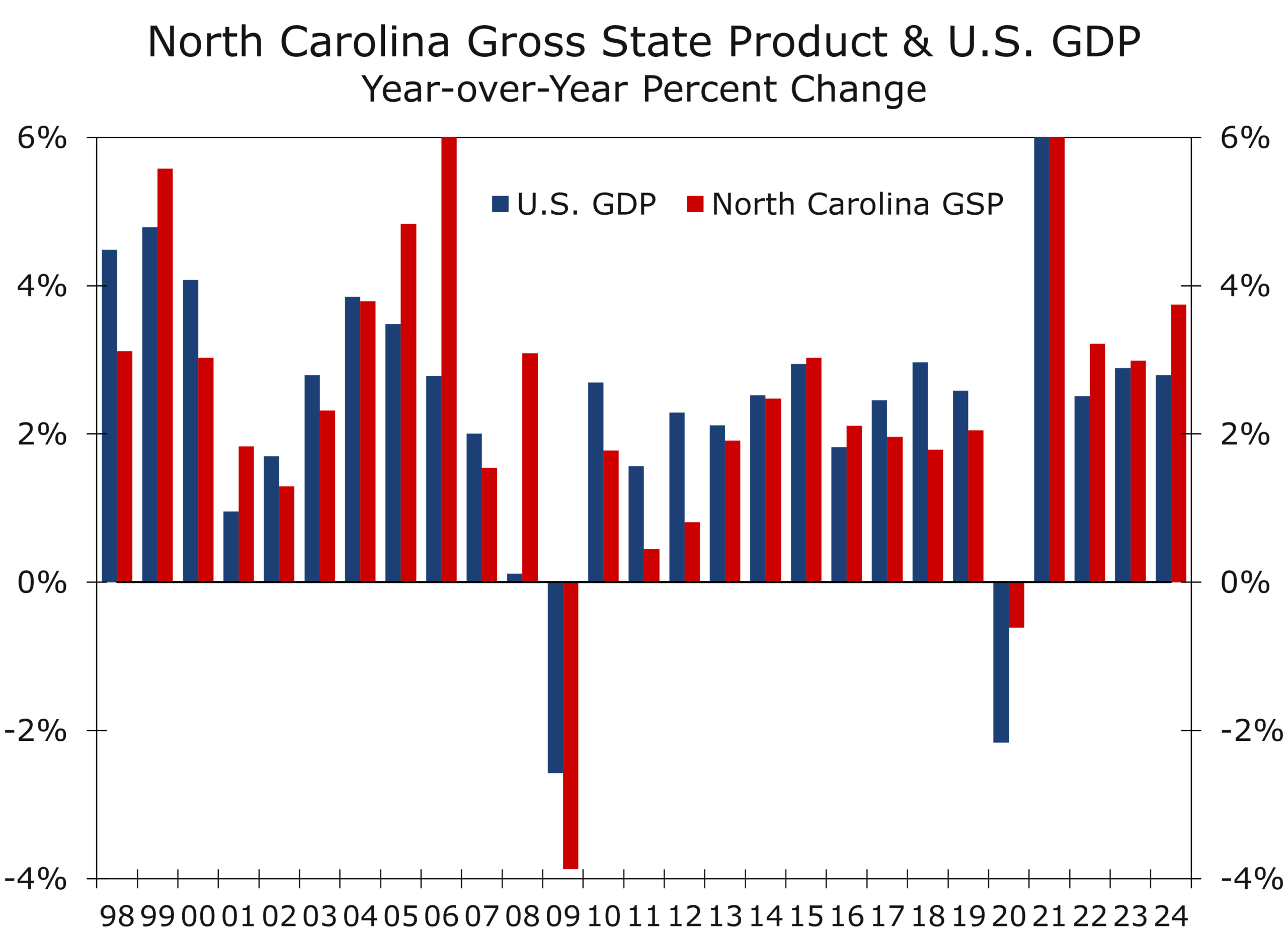
Beyond the Triangle, other major metro areas add depth to the state’s growth story: Charlotte, the nation’s second-largest banking hub; and Greensboro–Winston-Salem–High Point, an emerging leader in advanced manufacturing, aerospace, and logistics. Wilmington is another rapidly growing area, where technology is helping diversify an economy built around tourism, retirees and trade. Together they reinforce the state’s broad-based expansion and competitiveness. Real GDP growth has consistently outpaced the U.S. average, while the unemployment rate remains well below the national level — even as North Carolina absorbs one of the nation’s largest inflows of new residents. In 2024, the state ranked #2 in net domestic migration, behind only Texas.
Game Preview
As NC State (3–0, 1–0 ACC) heads into Durham to face Duke (1–2, 0–0 ACC), the stakes are higher than usual — especially for Duke, which is off to a slower start after a disappointing loss at Tulane. Analysts from ESPN, 247Sports, Backing the Pack, and others see a matchup of contrasting strengths and agree the outcome will come down to execution. That’s a simple formula, but Duke has struggled with consistency this year.
NC State enters with momentum. The Wolfpack have built their 2025 season around balance: a steady running game, efficient passing with fewer turnovers, and a defense that tightens in the second half, shutting down big plays and forcing mistakes. Those qualities have made NC State one of the more reliable teams in September under Coach Dave Doeren, and they are off to a 3–0 start.
Duke brings urgency. The Blue Devils’ season has come with growing pains. After transferring from Tulane, Darian Mensah has taken over as Duke’s starting quarterback for 2025. He flashed potential with several strong passing performances early, but in last week’s 34–27 loss at Tulane, Green Wave quarterback Jake Retzlaff exposed cracks in Duke’s secondary with four rushing touchdowns. Even so, Duke has an energized receiving corps — including Que’Sean Brown, Sahmir Hagans, and Cooper Barkate — and a defensive front capable of generating pressure. Playing at Wallace Wade Stadium gives them a chance to reset momentum at home.
Keys to Watch
-
NC State’s secondary vs. Duke’s passing attack: The Wolfpack have been tested through the air, and Mensah will look to exploit that.
-
Special teams and penalties: Costly mistakes in these areas hurt Duke at Tulane, and they cannot afford a repeat.
-
Red-zone efficiency: Both teams can move the ball, but finishing drives with touchdowns instead of field goals will likely decide the outcome.
Media Outlook
Most analysts expect a tight game. NC State is viewed as having a slight edge, thanks to its consistency and second-half defensive resilience. Duke, however, has enough playmakers and home-field energy to make this a true rivalry battle. A victory would help reset Duke’s season, while a win for NC State could propel the Wolfpack into the AP Top 25.
September 19, 2025
Mark Vitner, Chief Economist
Southeast Economic Advisors
704-458-4000