
From Wagon Road to EV and Life Sciences Corridor
How the Charlotte–Columbia Corridor is Becoming One of the Southeast’s Fastest-Growing Economic Development Regions.
Two centuries ago, wagon wheels cut deep ruts into the Carolina Piedmont as settlers traveled south along the Great Wagon Road in search of land and opportunity. Today, along roughly the same corridor, a new generation of vehicles—and a new economic region—is taking shape.
Two centuries ago, settlers moved south along a rough dirt route known as the Great Wagon Road, carrying families, tools, livestock, and the hopes of a new life. The road began in Philadelphia, Pennsylvania, and wound its way through Virginia into the rolling Piedmont of the Carolinas, depositing thousands of German and Scots-Irish farmers into what would become York, Lancaster, and Chester counties in South Carolina—located in roughly the same proximity to one another as their namesakes in eastern Pennsylvania.
The journey was slow and uncertain. Wagons creaked under heavy loads as migrants searched for fertile land and opportunity along the frontier.
Soon, a new kind of wagon will emerge along an adjacent corridor.
Approximately seventy miles south, Scout Motors is rapidly constructing a massive next-generation electric-vehicle assembly plant near Blythewood, South Carolina, just north of Columbia. When complete, the facility will manufacture rugged electric SUVs and trucks inspired by the legendary Scout vehicles originally built by International Harvester. The plant is expected to employ 4,000 workers at full capacity and support a robust supply chain—including an on-site supplier park projected to create around 1,000 jobs—when it begins initial production of SUVs by the end of 2027.
Yet the story does not stop in South Carolina.
Scout Motors has also chosen Charlotte as the location for its corporate headquarters, a move announced in November 2025 that will bring over 1,200 high-quality jobs to the Plaza Midwood neighborhood and reinforce the region’s increasingly integrated economic geography. The decision reflects a pattern seen repeatedly across the Carolinas: management, finance, and talent cluster in Charlotte, while large-scale production spreads across nearby manufacturing corridors in South Carolina and beyond.
While that project emanated from the South, one of Charlotte’s key economic initiatives—the opening of Wake Forest University’s new medical school campus and adjoining The Pearl Innovation District in 2025—is expected to drive life sciences and medtech development down the I-77 corridor, similar to how Research Triangle Park has spurred growth into areas like Holly Springs, Sanford, Wilson, and Greenville, or how Eds and Meds have helped rejuvenate the Philadelphia economy.
The symbolism is striking.
The Great Wagon Road once carried settlers south from Pennsylvania into the Carolina Piedmont. Today, Interstate 77 carries capital, workers, and supply chains between Charlotte’s corporate hub and South Carolina’s growing manufacturing base.
And along that corridor, a new economic region is rapidly taking shape—one that reflects a modern version of the Carolinas’ economic model: ideas and capital concentrate in large urban areas like Charlotte, while manufacturing scale spreads outward along the region’s industrial corridors.
Charlotte’s Growth Crosses the State Line
Charlotte has long been the economic capital of the Carolinas, positioned just north of the South Carolina state line near the geographic center of the two states. Increasingly, however, the region’s growth story extends well beyond North Carolina.
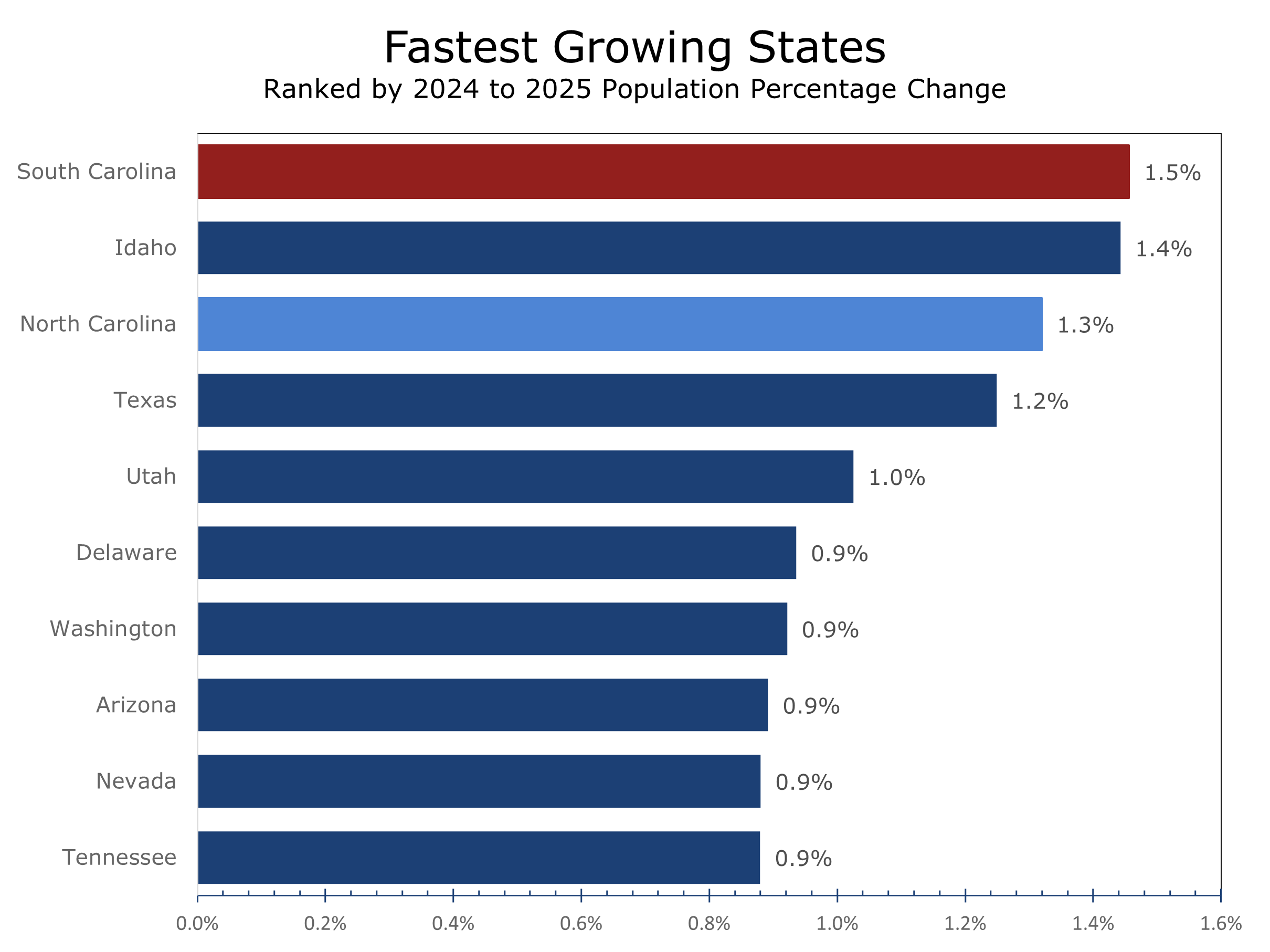
The Charlotte economy has become unmistakably bi-state, expanding steadily across the border into York, Lancaster, and Chester counties. What once served primarily as commuter territory has evolved into one of the Southeast’s fastest-growing development corridors.
Population growth is spilling southward, driving residential and commercial development. Logistics, advanced manufacturing, health care, and professional services are following, as firms seek the region’s skilled workforce and lower costs of living.
This pattern is familiar across the modern Sun Belt: People arrive first. Housing follows. Capital investment follows housing to tap into the deep labor pool.
Along the Interstate 77 corridor between Charlotte and Columbia, that process is accelerating, fueled by momentum at both ends.
Migration Momentum Reshapes the Border Region
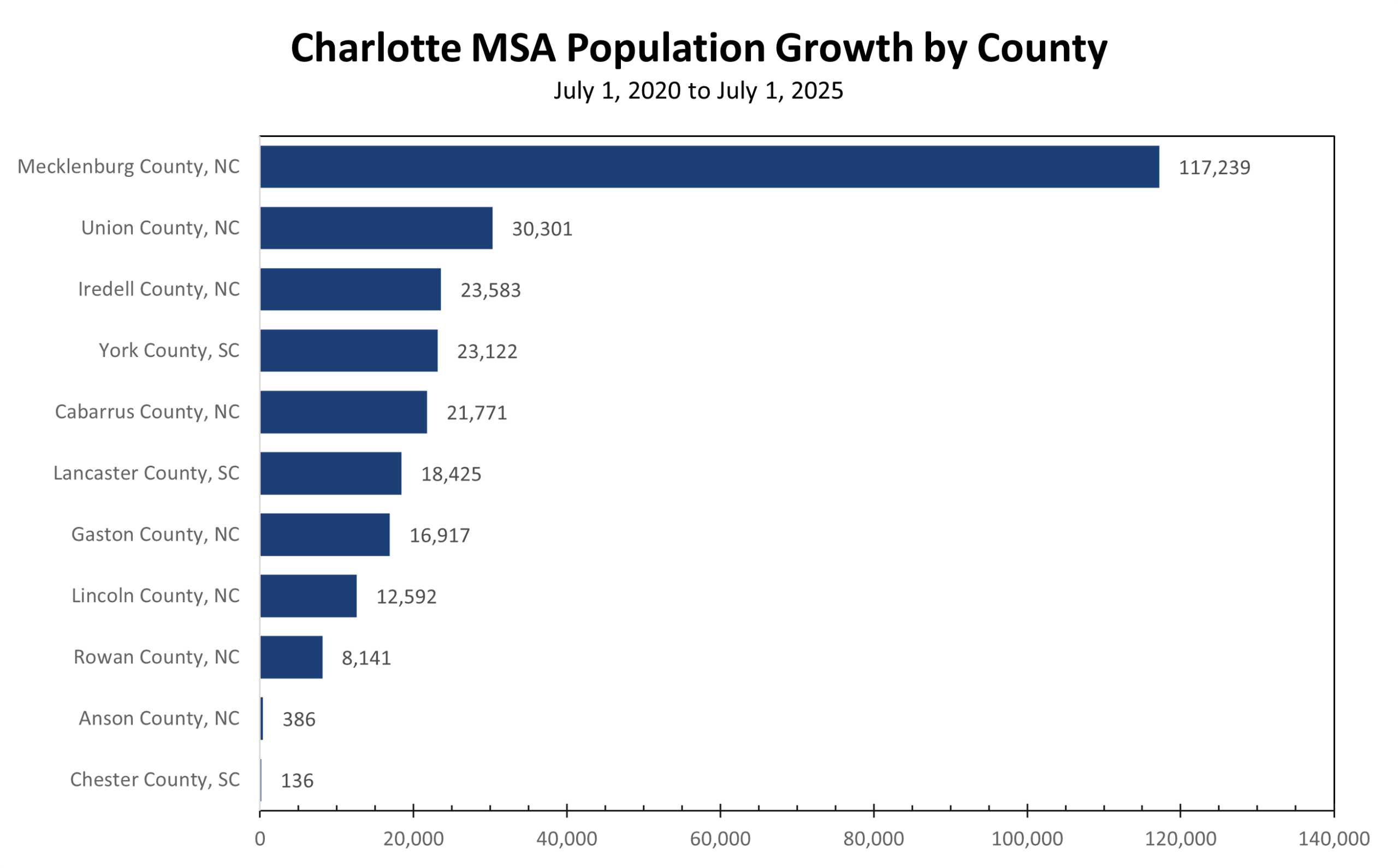
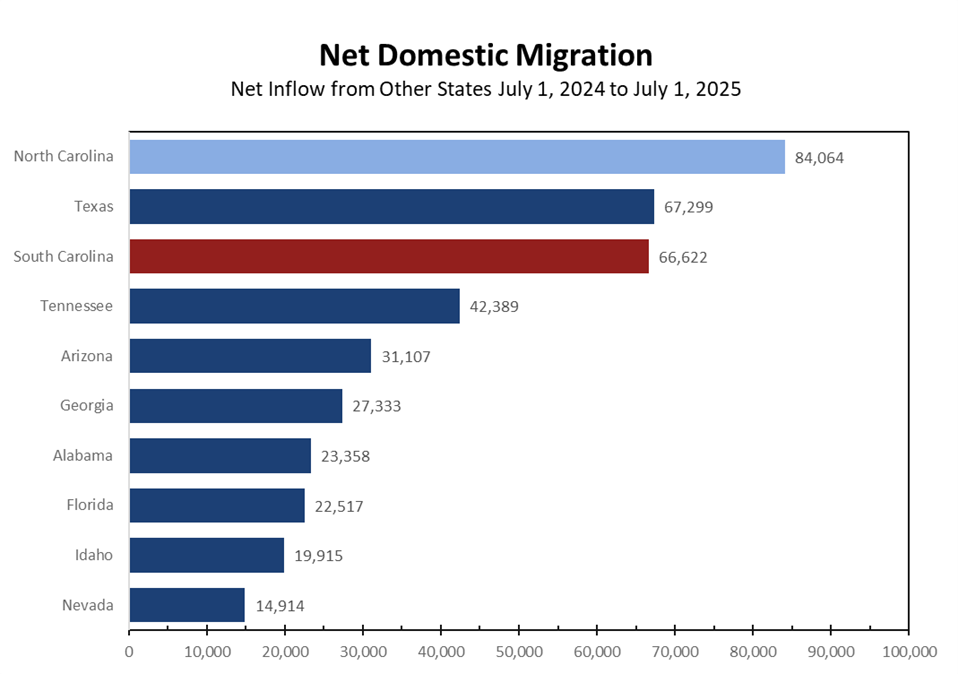
The Carolinas have become two of the strongest magnets for domestic migration in the United States. North Carolina ranked first nationally in net domestic migration (+84,000 from July 2024–July 2025), while South Carolina posted the highest overall growth rate (1.5%) and ranked third in domestic inflows (+66,600).
Charlotte sits at the center of this shift. With a metropolitan population of approximately 3 million (and a broader combined statistical area exceeding 3.5 million), the city functions as the management, finance, and talent hub for the wider Carolinas economy. It also hosts one of the nation’s busiest airports, with hundreds of daily nonstop flights to major U.S. and European cities.
The geography of growth is shifting. As housing costs and congestion rise in Mecklenburg County, development pushes outward. York and Lancaster counties now rank among the region’s fastest-growing communities, benefiting from proximity to Charlotte while offering abundant land and lower housing costs.
A related dynamic reinforces this trend: Rising insurance costs, congestion, and housing prices in Florida have prompted “boomerang migration” toward the Carolinas—close enough to enjoy warmer climates but with more manageable living costs and family proximity. This pattern has recurred in past cycles, diverting growth to the Carolinas after sustained Sun Belt booms.
Shared Roots: From Pennsylvania to the Carolina Piedmont
The names York, Lancaster, and Chester—and their close proximity—are no coincidence. Each traces its heritage to communities in southeastern Pennsylvania. Eighteenth-century settlers traveling the Great Wagon Road carried familiar place names with them, reproducing them as they moved into the Carolina Piedmont.
Many of these settlers were German and Scots-Irish farmers, whose cultural imprint remains visible today in church traditions, agricultural practices, and a long-standing regional culture of craftsmanship and small-scale industry.
In an interesting historical twist, the region has renewed strong ties with Germany—not through migration but through industry. German firms including BMW, Bosch, ZF Group, Continental, Daimler Truck, Schaeffler, and Siemens have invested billions across the Carolinas and within the broader Charlotte manufacturing corridor. Their presence has helped establish the region as one of North America’s most significant transatlantic manufacturing platforms and one of the largest concentrations of German-owned industrial operations in the United States.
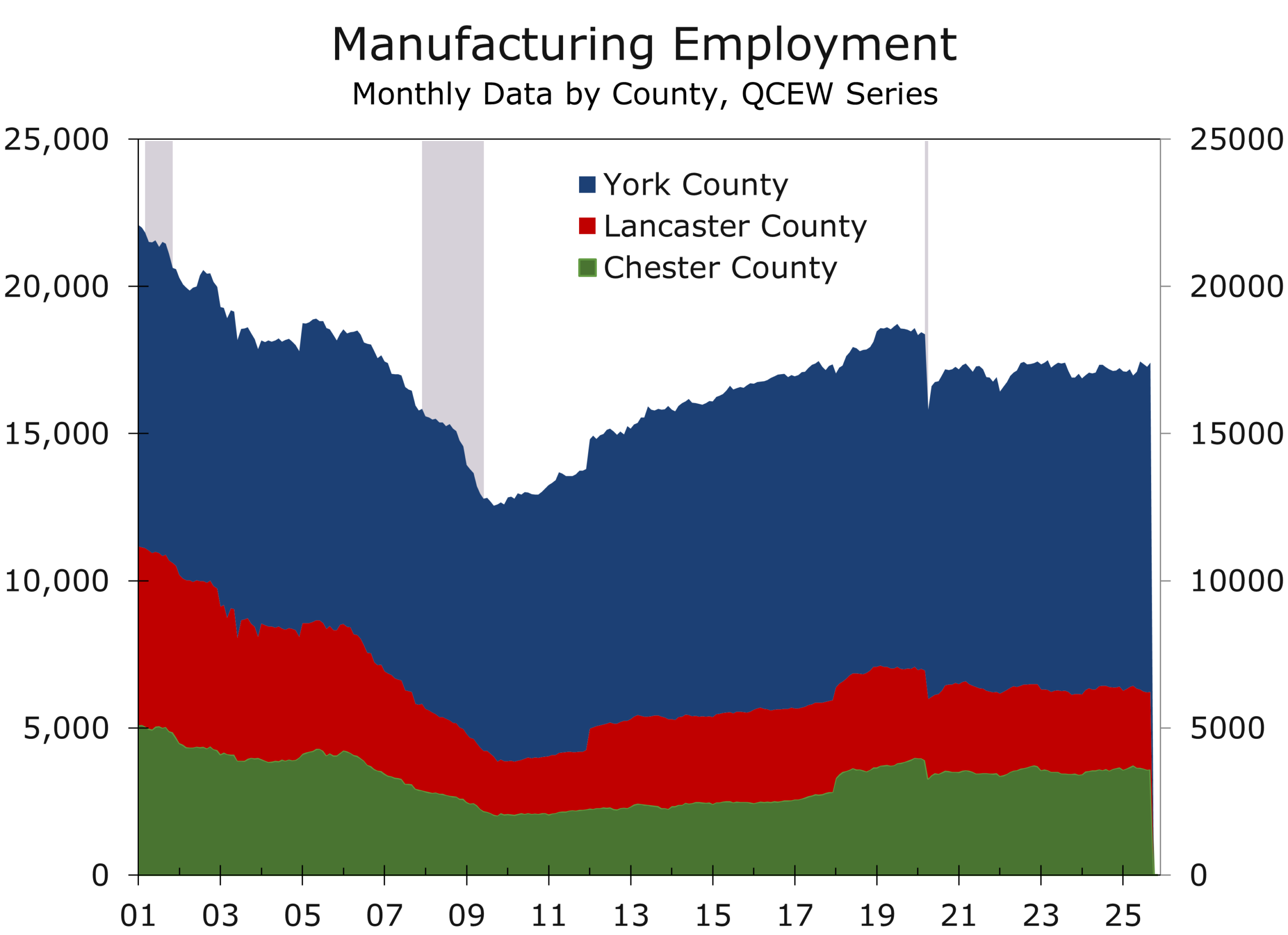
This wave of investment has also helped the region diversify beyond its historic dependence on textiles. The once-dominant textile industry was severely weakened by global competition following China’s entry into the World Trade Organization in 2001. Since the Great Recession, however, manufacturing has staged a meaningful recovery, supported by new investment such as the Giti Tire manufacturing plant in Chester County and expansions by a number of advanced manufacturers throughout the region.
Modern manufacturing differs markedly from the mills of the past. Today’s facilities are far more capital intensive and technologically sophisticated, meaning they generate fewer jobs per dollar of investment but typically produce higher wages, stronger productivity growth, and a more resilient industrial base. Ironically, the textile industry itself is beginning to share in this resurgence. Rising labor costs overseas, along with the growing risks and transportation expenses associated with long global supply chains, have begun to significantly narrow the cost advantage of offshore production. Even here, however, new textile facilities tend to be far more automated and capital intensive than those that once defined the region.
York County: Charlotte’s Southern Business District
York County has emerged as one of the most visible beneficiaries of Charlotte’s southward expansion. With a population now exceeding 300,000—projected to approach 312,000 by 2026—the county has evolved into a major economic center within the Charlotte metropolitan region. Rock Hill, Fort Mill, and the rapidly expanding northern communities now form a nearly continuous economic corridor stretching south from Charlotte.
Much of this growth reflects York County’s strategic position along Interstate 77, the primary transportation artery linking Charlotte with Columbia and the Port of Charleston. The corridor has become one of the Southeast’s most active development zones for residential growth, distribution infrastructure, and industrial investment.
Retail and logistics investment has accelerated alongside population gains. A prominent example is Costco’s planned $240 million regional distribution center in Rock Hill, which will supply stores across the Carolinas and Georgia, create roughly 165 jobs, and is expected to open by mid-2027. The county has already attracted major distribution and logistics operations from firms such as Ross Stores, U.S. Foods, Stanley Black & Decker, and McKesson Medical-Surgical.
Transportation and warehousing have played an important role in stabilizing goods-sector employment as the region transitioned away from its historic textile base. Local leaders are now seeking to strengthen the manufacturing sector by attracting advanced manufacturing in life sciences and medical technology, industries that combine the region’s long tradition of precision manufacturing with the higher wages and research intensity associated with biomedical production.
York County’s strategy reflects its position between several important medical and research centers. To the north, Charlotte is building a rapidly expanding life sciences cluster anchored by Atrium Health and the recently opened Wake Forest University School of Medicine campus. To the south, the University of South Carolina School of Medicine in Columbia and the Medical University of South Carolina in Charleston provide additional clinical research and biomedical education anchors. Workforce and research support are further strengthened by nearby institutions including University of North Carolina at Charlotte, Winthrop University in Rock Hill, York Tech, CPCC and Clinton College.
Further south in Rock Hill, the Palmetto Research Park, a 209-acre city-owned site, represents a centerpiece of the county’s strategy to attract higher-value industries. The site was rebranded in 2025 after the collapse of the planned Carolina Panthers headquarters project and is now being repositioned to recruit high-impact employers. With rail access, substantial electrical capacity exceeding 100 megawatts, and expedited development processes, local leaders are actively marketing the site to life sciences and medical technology firms capable of delivering high-wage employment and long-term economic transformation.
Together, these developments highlight a broader regional dynamic. Rapid population growth is drawing logistics hubs closer to consumers in order to shorten delivery times and reduce supply-chain costs, intertwining residential expansion with distribution infrastructure. At the same time, York County is positioning itself to capture a share of the Carolinas’ emerging life sciences and advanced manufacturing ecosystem.
Lancaster County: Charlotte’s Suburban Frontier
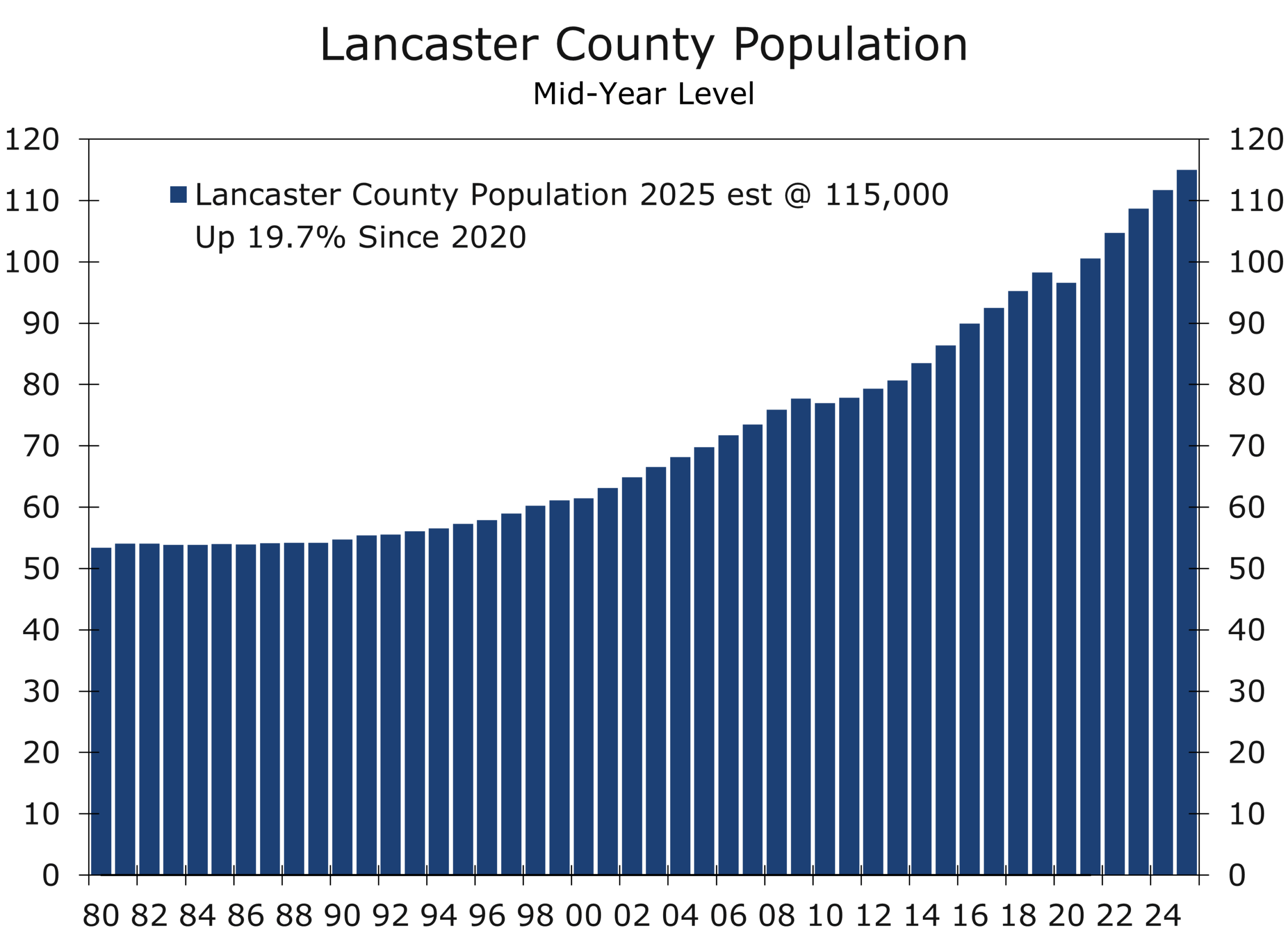
Just south of the North Carolina border, Lancaster County is emerging as one of the fastest-growing areas in the Charlotte metropolitan region. Once defined by textile mills and farmland, the county is now being reshaped by population inflows, residential development, and its increasingly close economic connection to Charlotte.
Geography has played an important role in this transformation. Lancaster County stretches north toward North Carolina’s irregular border, placing its northern communities, particularly Indian Land, directly south of the Ballantyne area of Charlotte. While the county does not extend into the City of Charlotte itself, this northern reach places Lancaster County closer to one of the region’s most dynamic employment centers than neighboring York County to the west.
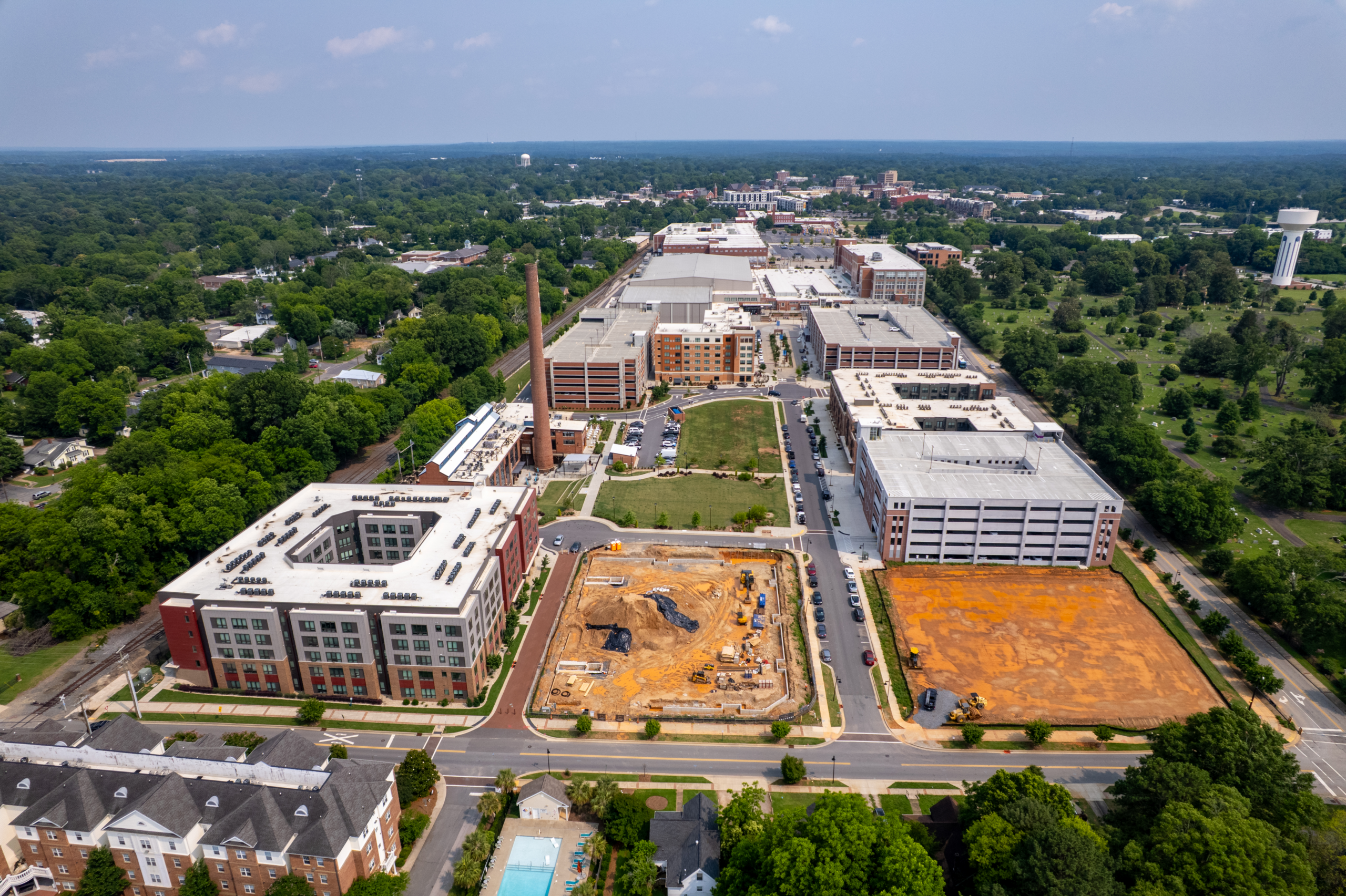
Over the past two decades, Ballantyne has evolved into one of Charlotte’s most prominent suburban office and mixed-use districts. Anchored by corporate offices, financial services firms, and technology companies, the area has grown into a major employment hub. More recently, Ballantyne Corporate Park redeveloped portions of its golf course into restaurants, entertainment venues, and new residential space, reflecting a broader shift toward a denser mixed-use environment. As Ballantyne has expanded, development pressure has naturally spilled south across the state line into Lancaster County.
Much of that growth has centered in Indian Land, a large unincorporated community that has effectively become a southern extension of Charlotte’s suburban footprint. Despite its size and economic importance, Indian Land is not an incorporated municipality but rather a census-designated place administered by Lancaster County. The name dates back to the eighteenth century, when the area formed part of lands reserved for Native American tribes following colonial treaties. The historic designation remained even as the area gradually transitioned from farmland into one of the fastest-growing suburban communities in the Carolinas.
Lancaster County also runs roughly parallel to York County south of Charlotte. The Catawba River forms much of the boundary between the two counties, and the river and its associated lakes have become powerful residential magnets over the past several decades. Waterfront housing, planned communities, and recreational development have expanded steadily as the Charlotte metropolitan population has grown.
Residential growth has been especially strong in northern Lancaster County. Master-planned communities such as Sun City Carolina Lakes and numerous new subdivisions have attracted retirees, young families, and Charlotte commuters seeking more attainable housing and lower taxes. As housing costs have risen in Mecklenburg County, Lancaster County has become an increasingly attractive option for households willing to live just beyond the state line while remaining closely connected to the Charlotte labor market.
Employment has expanded alongside the surge in population. Indian Land is home to Red Ventures, one of the region’s largest privately held technology and digital marketing firms, whose expansive campus employs thousands of workers. The area’s healthcare presence has also grown with services from MUSC Health, reflecting the strengthening of medical infrastructure across the county. Financial services, healthcare, and professional services firms tied to the Charlotte economy have further reinforced the area’s role as a growing white-collar employment center.
Commercial development has followed the rooftops. The U.S. 521 corridor, once a quiet rural highway, has rapidly filled with grocery stores, medical offices, restaurants, and neighborhood retail centers serving the area’s expanding population. Road improvements, utility investments, and school expansions are ongoing as local officials work to keep pace with the region’s rapid growth.
Lancaster County’s trajectory reflects a broader regional pattern. As land and housing costs rise in Mecklenburg County, development is increasingly spilling into surrounding counties across both North and South Carolina. York County experienced this transformation roughly a decade earlier. Lancaster County now appears to be following a similar path. Its northern communities are becoming an integral part of the expanding Charlotte metropolitan economy, while the retirement communities and southern portions of the county continue to develop their own distinct economic identities.
Chester County: Manufacturing Returns to the Corridor
While York and Lancaster counties grow mainly through residential expansion, Chester County has charted a distinct manufacturing-led path.
Once a key textile center, the county lost much of that industry to global competition in the late twentieth century. Yet it preserved vital assets—rail connections (including L&C Railway), I-77 access, and industrial land—priming it for resurgence.
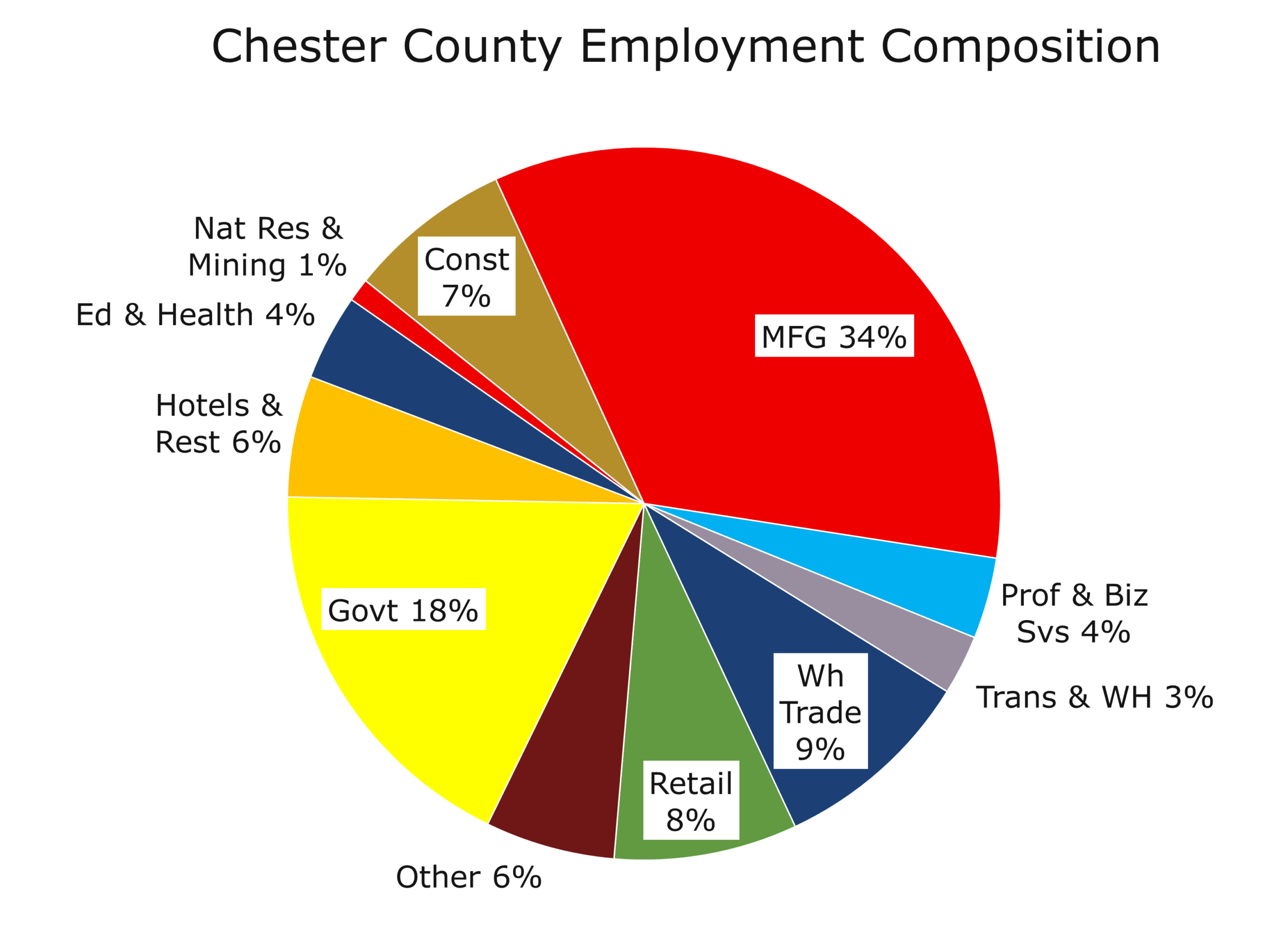
Manufacturing, wholesale trade, trucking, and warehousing now comprise roughly 46% of private-sector jobs—far above the national average—making Chester the Charlotte region’s leader in manufacturing job growth (70% from 2010–2020; 43.7% from 2014–2023).
Major investments include:
- Giti Tire’s $560 million plant (2014; 1,700 jobs).
- E. & J. Gallo Winery’s $423 million bottling/distribution facility (496 jobs).
- IKO’s $363 million roofing-materials expansion (2023; 180 jobs).
- Albemarle Corporation’s $1.3 billion lithium hydroxide facility in Richburg (2023; 300+ jobs for EV batteries; phase 1 targeted 2026).
Recent additions like Officine Maccaferri’s Fort Lawn expansion (75 jobs, tripling footprint) and Luck Companies’ $93 million quarry (25 jobs) have driven over $2.5 billion in capital investment and 1,460+ new jobs since 2020. The 2025 Comprehensive Plan prioritizes advanced manufacturing, office headquarters, and small business growth alongside infrastructure upgrades.
These initiatives have stabilized the economy after prolonged population decline, cementing Chester’s role in the I-77 EV and advanced materials supply chain.
Residential development is also seeing gains, with a handful of national builders cautiously expanding in the county. Chester County is well positioned to benefit both from spillovers from Charlotte to the North and from Columbia to the South, as builders seek lower land costs and fewer development constraints.
From Wagon Road to Interstate Corridor
Two centuries ago, settlers traveled south along the Great Wagon Road seeking land and opportunity.
The infrastructure differs today, with interstates replacing dirt roads and electric vehicles supplanting wagons. The economic logic driving migration to the region, however, endures.
Migration drives growth. Infrastructure shapes opportunity. Communities along major corridors hold the greatest potential.
York, Lancaster, and Chester counties now anchor one such corridor.
What began as a migration route from Pennsylvania to the Carolina Piedmont is evolving into a modern economic powerhouse: connecting Charlotte’s financial center with South Carolina’s emerging electric-vehicle manufacturing platform.
History rarely repeats itself.
But sometimes it rhymes.
March 12, 2026
Mark Vitner, Chief Economist
Southeast Economic Advisors
704-458-4000