
Gone to Carolina: The South’s New Growth Leaders

James Taylor’s “Carolina in My Mind” has taken on a decidedly literal meaning for millions of Americans. Taylor, who spent part of his childhood in Chapel Hill, wrote the song in 1968 while living in London, capturing a deep longing for the “sunshine” and “moonshine” of home. Nearly six decades later, the rest of the country appears to have caught on.
The U.S. Census Bureau’s Vintage 2025 population estimates confirm that while national population growth slowed to a modest 0.5% (+1.8 million people), the internal center of gravity of the U.S. economy continues its steady shift southward. That rebalancing has persisted even as overall growth cooled, reflecting a historic slowdown in net international migration and a renewed importance of domestic mobility. Of those moving within the United States this past year, most relocated to the South.
The New Southern Engine: Research, Reshoring, and Resilience in the Carolinas
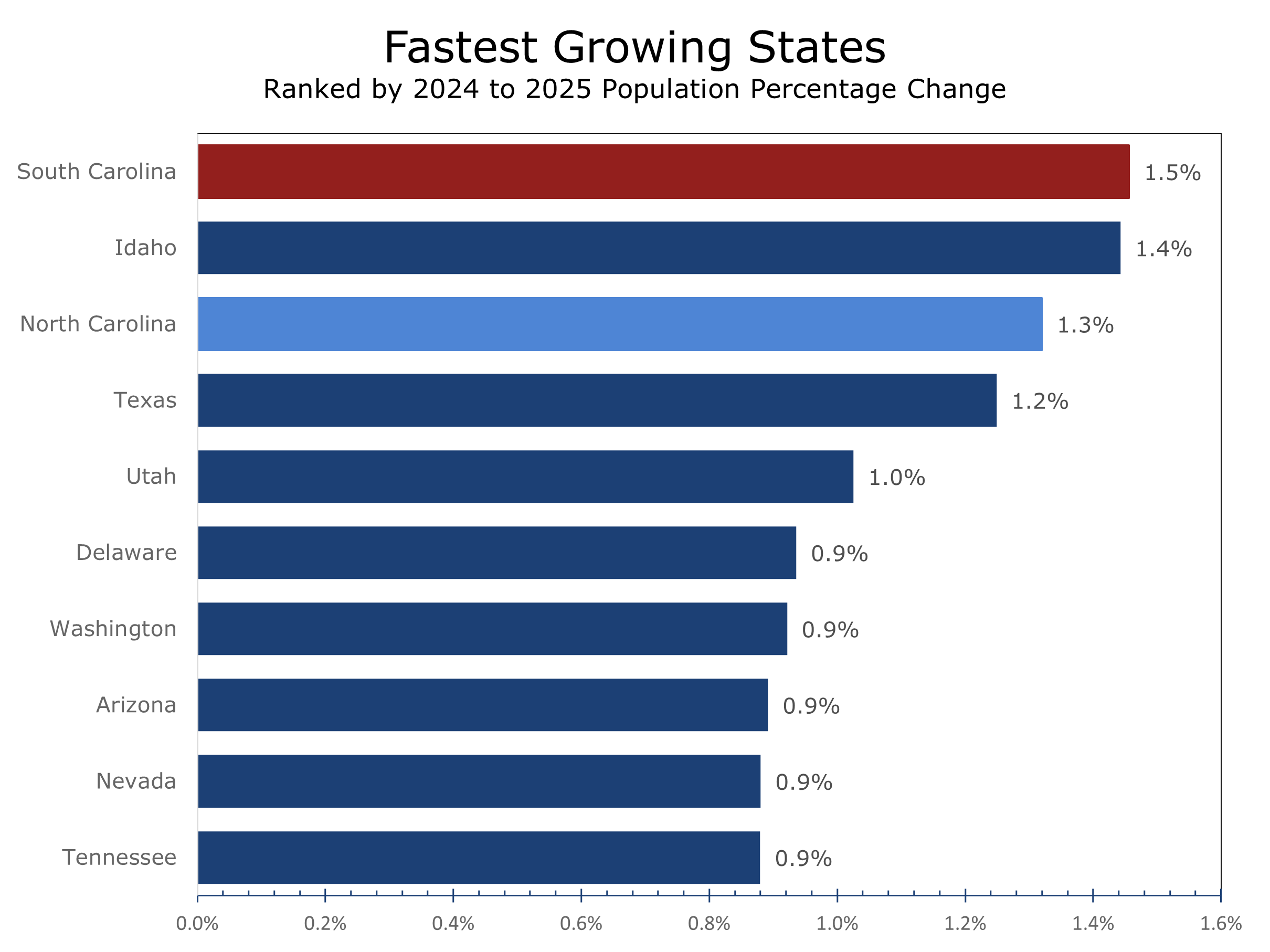
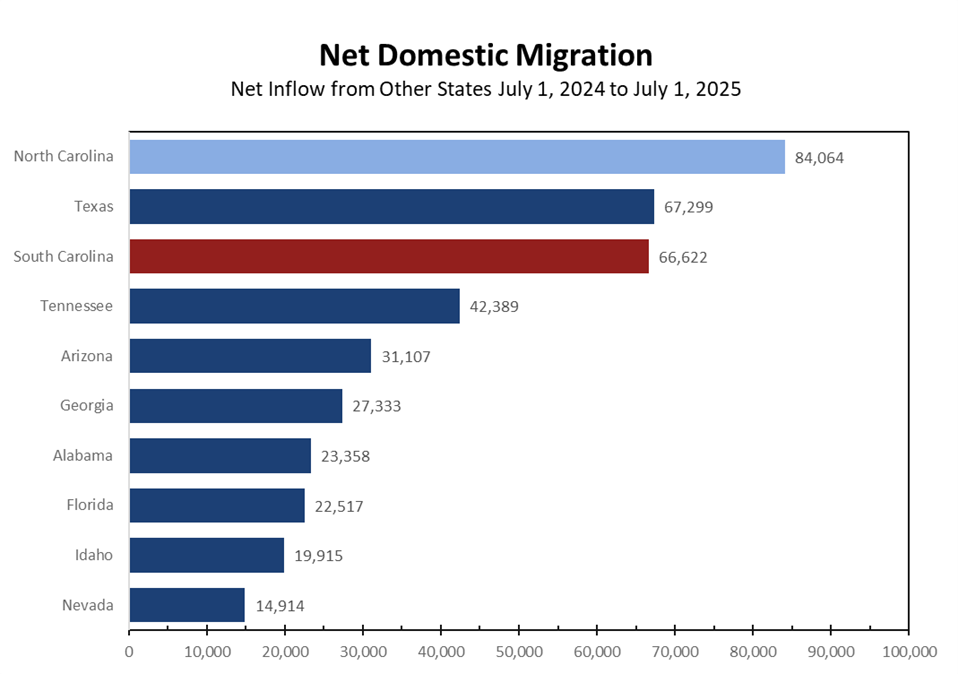
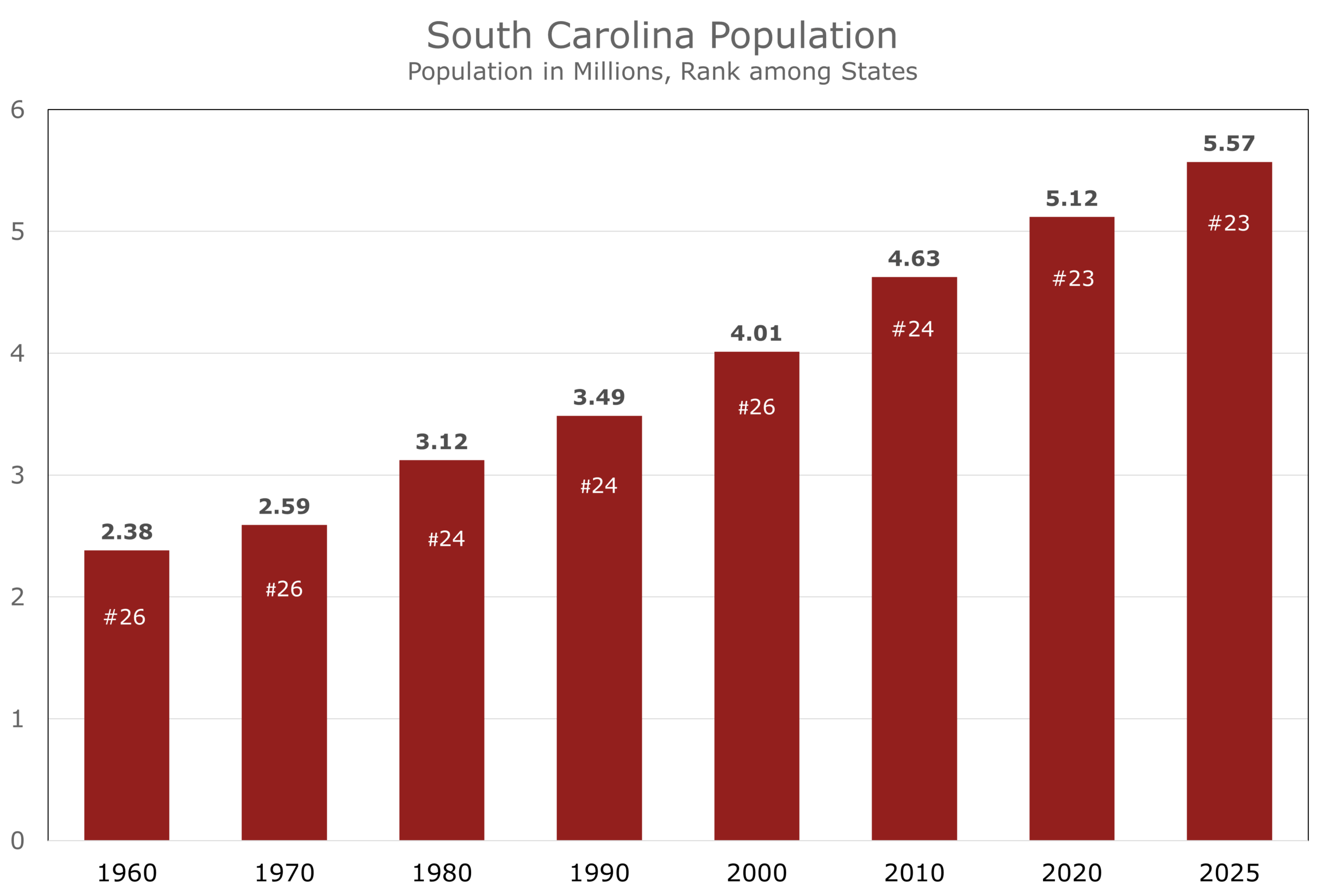
- North Carolina led the nation in net domestic migration in 2024–2025, adding roughly 84,000 residents from other states, while South Carolina ranked third nationally and was the fastest-growing state on a percentage basis (+1.5%). .
- The Carolinas’ momentum is now capital- and opportunity-driven, with corporate headquarters, advanced manufacturing, R&D facilities, and logistics infrastructure following the people.
- Charlotte functions as the regional economic command center, blending global financial strength with diversification into energy, healthcare, logistics, and technology.
- The Research Triangle continues to expand its intellectual reach, translating university and corporate research into large-scale life sciences and advanced manufacturing across eastern and central North Carolina.
- The Piedmont Triad has re-emerged as a major capital-intensive industrial platform anchored by Toyota’s battery plant, Siemens rail production, Nucor steel, and a fast-growing aerospace cluster at PTI.
- South Carolina is evolving from an assembly-based economy into a sophisticated industrial platform, combining world-class engineering (Upstate), aerospace integration (Charleston), and record rural investment.
- Six of the nation’s ten most desirable counties for relocation are in the Carolinas, underscoring the powerful blend of economic opportunity and lifestyle appeal.
- By 2030, North Carolina is projected to reach 11.7 million residents (likely becoming the 8th-largest state) and South Carolina 5.7 million, further shifting the center of U.S. economic gravity southward.
The Carolinas Take the Lead
Within the South, the Carolinas have emerged as the clear leaders in net domestic migration.
The Carolinas are no longer competing on climate alone. Migration is now following capital, industry infrastructure, and opportunity. Corporate headquarters, manufacturing plants, and R&D facilities are following the migration, relocating facilities to large, medium and small metro areas throughout the region.
North Carolina led the nation in net domestic migration, surpassing long-time leader Florida and edging out Texas. Between July 2024 and July 2025, the state added roughly 84,000 residents from other states. South Carolina ranked third in domestic net migration, narrowly trailing Texas, and was the fastest-growing state in the nation on a percentage basis, expanding by 1.5%.
The influx into the Carolinas is no longer a pandemic-era anomaly. It reflects a more durable recalibration driven by relative affordability, labor market depth, and the maturation of industrial, research, logistics, digital infrastructure, and defense ecosystems across both states.
Charlotte: The Geographic and Economic Heart
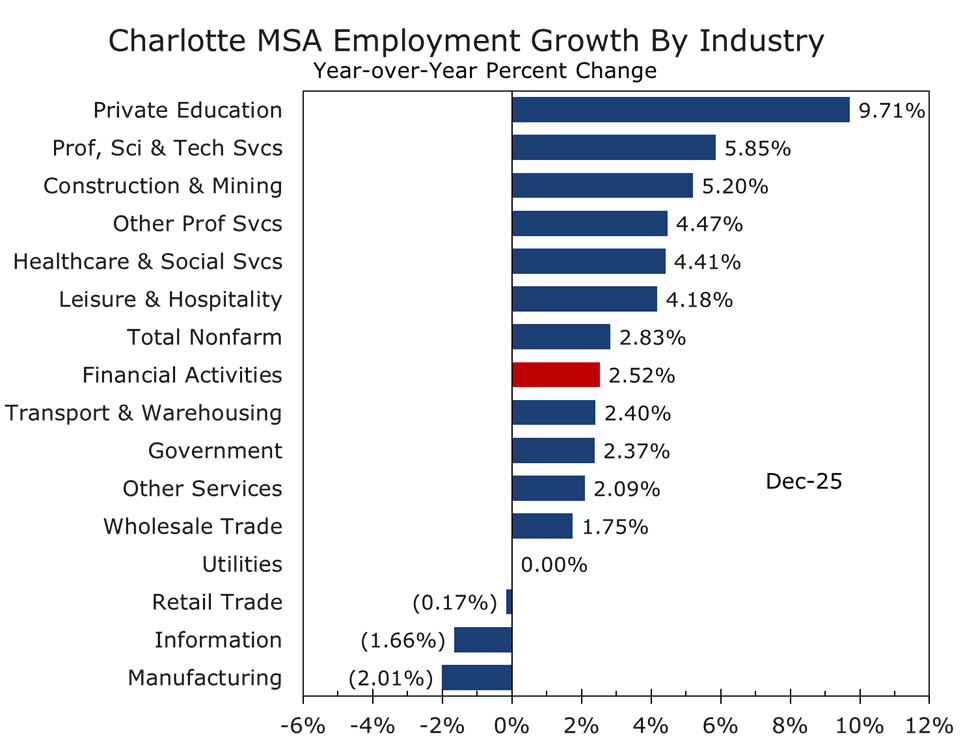
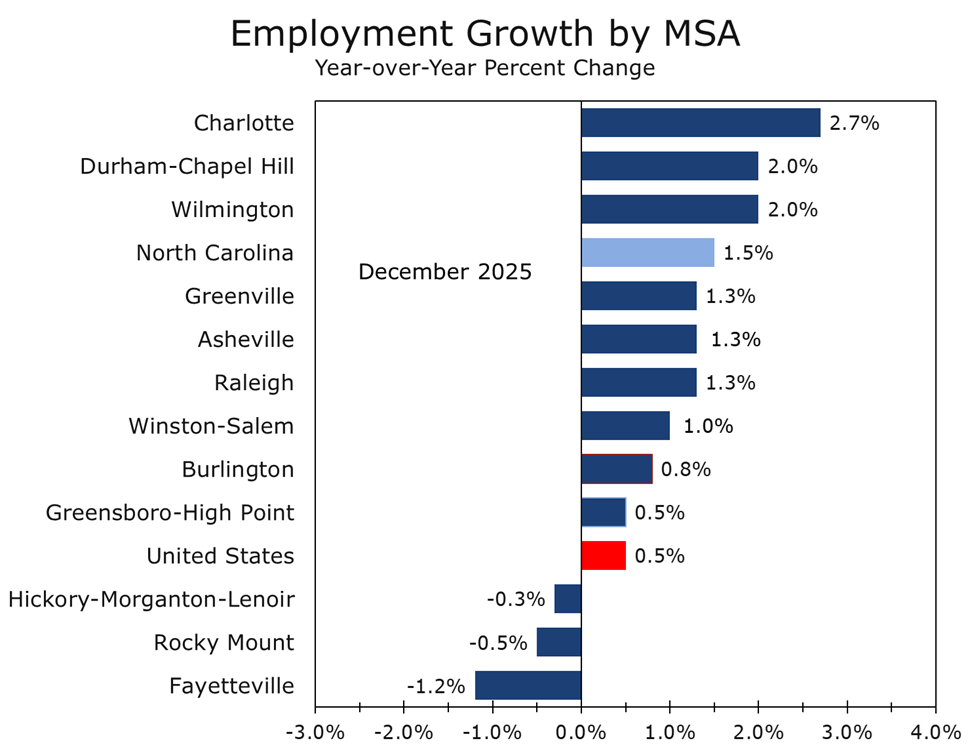
Charlotte sits at the center of this transformation, both literally and economically. As the largest metro area in the Carolinas—with a metropolitan (MSA) population approaching 3 million and more than 3.5 million residents in the broader combined statistical area (CSA)—and straddling the North–South Carolina border, Charlotte increasingly functions as a regional command center rather than a single-state economy. Growth now routinely spills across state lines, driving rapid expansion into York and Lancaster counties in South Carolina and beyond.
Charlotte increasingly serves as the management, finance, and talent hub for the much larger Carolinas’ economy.
The city remains a global financial center, anchored by Bank of America, Truist, Wells Fargo, and Ally Financial, but its economy is far more diversified than its banking reputation suggests. Energy, healthcare, logistics, and a growing technology sector provide resilience and breadth. Recent announcements illustrate this momentum: Maersk selected Charlotte in late 2025 as its North American headquarters, expanding its local workforce to more than 1,300 with over 500 new jobs in logistics, technology, and corporate functions; Pacific Life announced is establishing a new East Coast hub in Riverside’s new tower in South End and will temporally occupy space in Uptown while that tower is built, adding roughly 300 positions in finance, actuarial, and technology roles; Scout Motors announced it is locating its U.S. headquarters just outside of downtown in Charlotte’s Plaza Midwood area; and The Pearl innovation district continues advancing as a mixed-use hub for medical education, Medtech, and professional training. Charlotte Douglas International Airport consistently ranks as the second-busiest airport along the Eastern Seaboard, trailing only Atlanta’s Hartsfield-Jackson, reinforcing the region’s role as a national gateway for corporate headquarters and advanced services.
From Research to Reach: The Triangle’s Expanding Footprint
If Charlotte is the geographic heart of the Carolinas, the Research Triangle remains its intellectual engine. The Triangle Combined Statistical Area now exceeds 2.5 million residents, with roughly two-thirds concentrated in the Raleigh–Cary metro area and just over a quarter in Durham–Chapel Hill. The remainder lies primarily to the north and east, increasingly connected to the region’s growth dynamics.
Raleigh and Durham: Research, Capital, and Commercialization
Raleigh’s growth has been driven by a powerful combination of technology, life sciences, and public-private investment. The region continues to benefit from a deep bench of software, cloud infrastructure, and enterprise services firms, alongside expanding venture capital activity and a steady inflow of corporate relocations. Life sciences and biotech research remain central, supported by university pipelines and an expanding ecosystem of contract research, data analytics, and regulatory services. Raleigh’s role is increasingly that of a commercialization hub—where research translates into startups, scale-ups, and corporate headquarters.
Durham complements this model with a heavier emphasis on life sciences, healthcare innovation, and advanced research. Anchored by major medical institutions and research universities, Durham has become a focal point for biopharma R&D, clinical trials, and translational science. The city’s strength lies in early-stage discovery, applied research, and talent density, creating a natural handoff to manufacturing and scale elsewhere in the state.
Together, Raleigh and Durham form a dual-engine system: one oriented toward commercialization and enterprise growth, the other toward discovery and applied research.
From Research to Production
The most important evolution underway, however, is no longer confined to Raleigh, Durham, and Chapel Hill themselves. It is how Triangle-based research is increasingly translating into tangible economic gains across a widening arc of North Carolina.
Holly Springs, located in eastern Wake County, has become one of the most consequential examples of this shift. Over the past decade, the town has emerged as a national-scale life sciences manufacturing hub, attracting a succession of capital-intensive investments that few peer communities can match. Major biologics and vaccine manufacturing campuses operated by Amgen, FUJIFILM Diosynth Biotechnologies, Seqirus, and CSL have transformed Holly Springs into an industrial extension of the Triangle’s research base.
Clayton, in southeastern Wake County and neighboring Johnston County, has become a critical extension of this model. Anchored by Novo Nordisk’s multibillion-dollar pharmaceutical manufacturing expansion, Clayton reinforces a southern arc of regulated, capital-heavy production that complements Holly Springs rather than competes with it.
What distinguishes these nodes is not just deal volume, but durability. These are long-lived facilities with multibillion-dollar capital commitments, high regulatory barriers, and deeply embedded workforce requirements. Once established, they are exceptionally sticky. The growth they generate is capital-heavy, productivity-driven, and resilient across cycles.
Extending East: Scale and Specialization
That same research-to-production dynamic is now spreading further east. Cities such as Sanford, Wilson, and Greenville are capturing advanced manufacturing, life sciences production, healthcare expansion, and logistics investment that leverages Triangle innovation while benefiting from lower costs, available land, and faster project execution.
In Greenville, this momentum is increasingly reinforced by East Carolina University and its health sciences campus. ECU’s Brody School of Medicine, nursing, and allied health programs anchor a growing life sciences and healthcare ecosystem that supports clinical research, medical services, and downstream bio-manufacturing. Together, ECU and the regional healthcare sector are helping reposition Eastern North Carolina as an extension of the state’s life sciences value chain rather than a peripheral market.
Eastern North Carolina, long viewed as structurally lagging, is increasingly functioning as the scaling platform for ideas generated in the Triangle.
North Carolina’s advantage lies in its ability to separate research, production, and scale—without breaking the system.
The result is a more integrated state economy, where research, manufacturing, and distribution no longer need to co-locate in a single metro to succeed.
The Piedmont Triad: Capital-Led Industrial Momentum
Nowhere is this capital-led model more visible than in the Piedmont Triad. Once viewed as a legacy manufacturing region in search of a new identity, the Triad is re-emerging as one of the Southeast’s most important industrial platforms.
Toyota’s $13.9 billion battery manufacturing facility in Liberty, located in Randolph County, began lithium-ion battery production in mid-2025 and formally launched commercial shipments in November 2025. The plant supplies batteries for hybrid electric vehicles, plug-in hybrids, and battery electric vehicles, and currently employs more than 2,500 workers, with a long-term target of 5,100 as additional production lines come online through 2030.
Siemens Mobility’s $220 million passenger rail car production facility in Lexington (Davidson County) began operations in 2025 and is actively ramping up production of next-generation rolling stock. The plant is on track to create more than 500 jobs as hiring continues.
Nucor’s $350 million rebar micro mill in Lexington started operations in mid-2025 and is now ramping commercial production of concrete reinforcing bar (rebar) made with nearly 100% recycled content and an annual capacity of 430,000 tons. The facility is expected to employ approximately 200 workers once fully ramped and strengthens local supply-chain resilience for infrastructure and construction projects.
Greensboro’s Piedmont Triad International Airport (GSO) plays a critical—though often underappreciated—role in this transformation. While unlikely to reclaim its former status as a major passenger hub, GSO has evolved into a vital industrial and logistics asset. Its uncongested airfield, proximity to manufacturing sites, and longstanding status as a major FedEx Express hub provide high-value freight capacity and supply-chain reliability that few peer airports can match. In today’s economy, that distinction is decisive.
This infrastructure foundation has directly fueled the Triad’s growing prominence in advanced aviation. Major investments from JetZero ($4.7 billion commitment, groundbreaking planned for 2026) and Boom Supersonic are now taking shape at and around PTI. These build on an established aerospace cluster that includes HondaJet (headquartered and manufacturing in Greensboro), HAECO (large-scale maintenance and modification), Marshall Aerospace, and a widening supplier ecosystem.
This is not a conventional jobs-first expansion. It is a capital investment-driven expansion. The projects are highly capital-intensive, technologically sophisticated, and closely aligned with reshoring, defense-adjacent manufacturing, and next-generation mobility. By design, they feature extended timelines before reaching full employment impact—prioritizing productivity gains and long-term competitiveness over immediate headcount growth.
This is not a jobs cycle. It is a balance-sheet cycle.
South Carolina: From Assembly to Advanced Industrial Platform
South Carolina’s growth reinforces many of the same capital-led themes reshaping the broader Carolinas, but with a critical distinction: the state is successfully pairing industrial scale with applied research, engineering depth, and advanced materials capability.
The Greenville–Spartanburg–Anderson region, the Upstate, sits at the center of this model. Anchored by BMW, Michelin, and GE Vernova, which recently committed more than $160 million to expand gas turbine production, and supported by the South Carolina Technology & Aviation Center and Inland Port Greer, the Upstate has evolved into one of the world’s most sophisticated manufacturing platforms. Its competitive advantage now extends beyond production into research, testing, and product development. Clemson University’s International Center for Automotive Research has become a premier hub for automotive R&D, advanced materials, and next-generation mobility engineering, helping anchor a dense concentration of engineers and applied researchers across the region.
South Carolina is no longer just building cars and planes. It is designing and engineering them.
This depth is further reinforced by the Upstate’s growing role in advanced materials. Carbon fiber and composite manufacturing now form an integral part of the industrial base, supporting lightweighting in aerospace and automotive applications as well as durability-critical components. These capabilities are moving South Carolina beyond the traditional assembly narrative and positioning the state as a genuine center of industrial innovation.
Roughly 200 miles to the southeast, Charleston extends this story to the coast, where aerospace, logistics, defense, and digital infrastructure converge. Boeing’s North Charleston campus is now the global home of the 787 Dreamliner, with all final assembly consolidated there. In a significant recent development, Boeing announced plans to relocate approximately 300 787 engineering and design positions from the Seattle area to South Carolina, further deepening Charleston’s role from a manufacturing endpoint into a more fully integrated aerospace center.
Taken together, these regions illustrate how South Carolina is knitting engineering talent, research capability, advanced materials, production scale, and logistics into a cohesive statewide industrial platform. The result is more durable growth—capital-intensive, globally connected, and increasingly resilient to cyclical swings.
Taken together, these regions illustrate how South Carolina is knitting engineering talent, research capability, advanced materials, production scale, and logistics into a cohesive statewide industrial platform. The result is more durable growth that is capital-intensive, globally connected, and increasingly resilient to cyclical swings
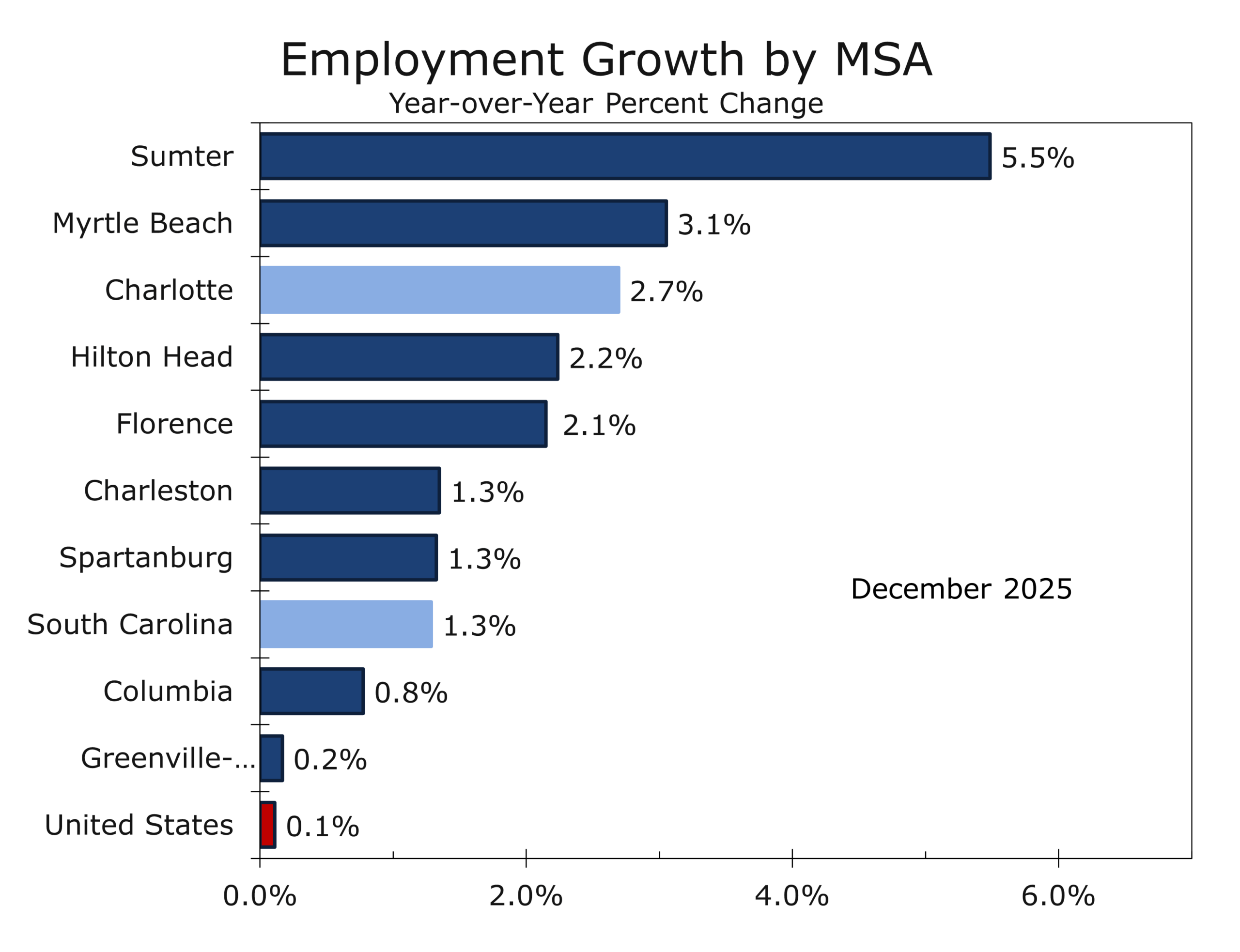
Along the I-26 corridor, Volvo Cars’ Ridgeville plant has emerged as a second major automotive anchor. The facility is ramping production of the EX90 electric vehicle and preparing to add the bestselling XC60 SUV in late 2026. Meanwhile, the I-77 corridor between Charlotte and Columbia is reversing decades of rural decline. Counties such as Chester are benefiting from manufacturing and logistics investment tied to Scout Motors’ new electric vehicle assembly plant in Blythewood, which remains under construction and has already hired more than 500 workers. Scout’s decision to locate its U.S. corporate headquarters in Charlotte further cements the economic integration between South Carolina’s production base and Charlotte’s management and talent hub.
The latest economic development data underscore the breadth of this momentum. The South Carolina Department of Commerce reported $9.12 billion in total announced capital investment in 2025, the third-highest year for industry recruitment on record, along with more than 8,100 announced new jobs. Notably, rural recruitment accounted for $4.25 billion, or 46 percent of total announced capital investment, and more than 3,500 jobs, or 44 percent of the total. Of the 82 announced projects, 34 chose rural communities, classified as Tier III and IV counties.
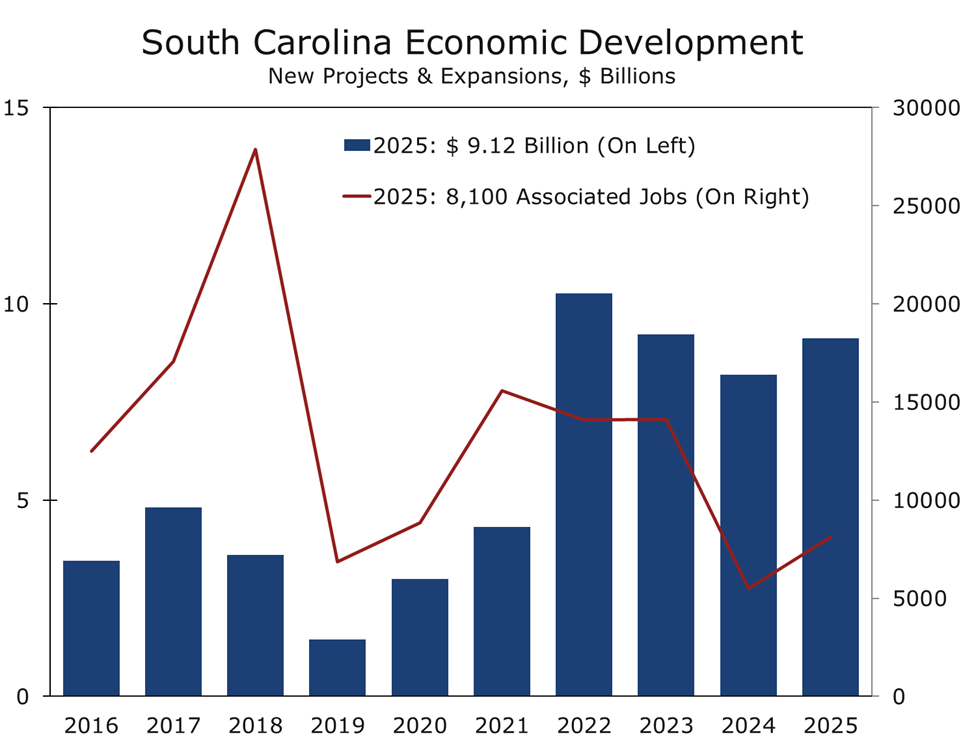
This rural concentration is significant. It reflects a strategy that extends advanced manufacturing, agribusiness, automotive, energy, and wood and paper investment beyond traditional metro cores. More than 40 percent of both capital investment and job announcements occurred in rural counties, the highest share since 2010. That dispersion helps anchor growth statewide, strengthening supply chains and workforce participation while reinforcing long-term resilience.
Taken together, the Upstate’s engineering depth, Charleston’s aerospace scale, the Midlands’ automotive expansion, and record rural recruitment confirm that South Carolina’s growth model is evolving. It is no longer defined solely by assembly and export. It is increasingly defined by design, engineering, advanced materials, and distributed industrial development.
Lifestyle Markets and Balance
The Carolinas also retain an advantage that pure industrial powerhouses often lack: lifestyle optionality. Coastal markets such as Wilmington, Myrtle Beach, Hilton Head, and Charleston continue to attract retirees and remote workers, supported by tourism and logistics. In the mountains, Asheville remains a resilient creative hub, while high-altitude communities such as Cashiers, Highlands, and Blowing Rock draw lifestyle migrants seeking cooler summers and natural amenities.
Desirability Beyond the Numbers
Public interest data underscores the breadth of the Carolinas’ appeal. In its January 2026 “2025 Relocation Map,” U.S. News & World Report analyzed relocation search behavior and found that six of America’s ten most desirable counties to move to are in North and South Carolina.
The top 10 counties nationally were:
- Brunswick County, North Carolina; #1 Nationally (coastal community near Wilmington)
- Horry County, South Carolina; #2 Nationally (Myrtle Beach and surrounding areas)
- Catawba County, North Carolina; #7 Nationally (Blue Ridge foothills, proximity to Charlotte, lakes, and outdoor recreation)
- Greenville County, South Carolina; #8 Nationally (Upstate hub with strong amenities)
- Dorchester County, South Carolina; #9 Nationally (proximity to Charleston)
- Gaston County, North Carolina; #10 Nationally (affordable access to the Charlotte metro)
South Carolina ranked No. 1 and North Carolina No. 4 among states in overall relocation interest. The South as a whole claimed 45 of the top 50 counties, driven by milder climates, coastal and mountain access, lower costs of living, and a balance of job opportunities with quality-of-life amenities.
“Six of the top 10 most desirable counties in America are in the Carolinas.” — U.S. News & World Report, January 2026
This migration desirability map aligns closely with the capital-led industrial growth and research-to-production dynamics reshaping the Carolinas. People are not simply chasing jobs or retirement—they are choosing places where opportunity, infrastructure, and lifestyle converge. Coastal counties draw retirees and remote workers, Upstate and foothill counties appeal to families and professionals, and metro-adjacent areas like Gaston benefit from spillover from Charlotte’s financial and talent hub.
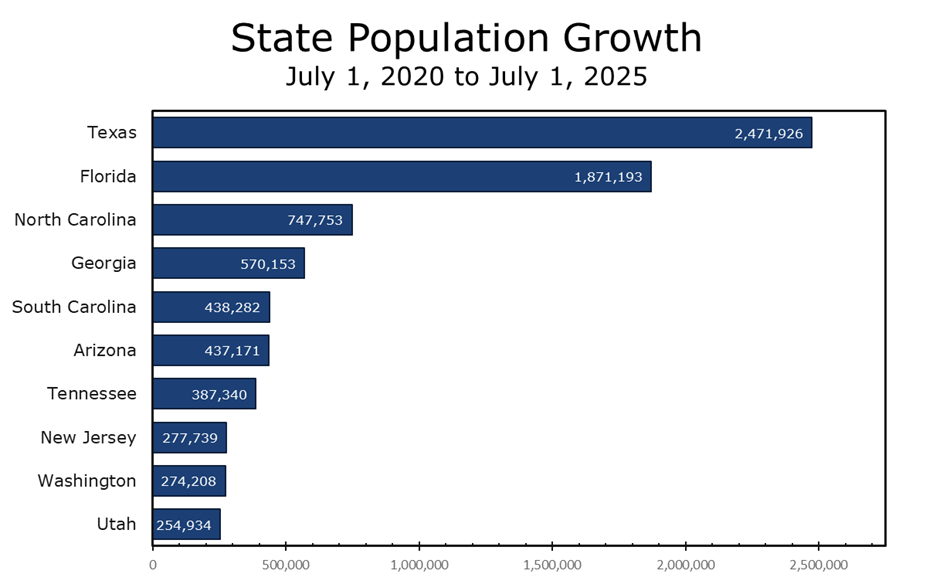
Despite the recent surge in net domestic migration, Texas and Florida still lead in overall population growth through the first half of the 2020s. The leaderboard will change modestly over the balance of the decade, with tighter immigration enforcement likely to materially slow growth in immigration-dependent states and states enacting large tax hikes. The South will remain the top destination, along with a few hot spots in the Mountain West, including Arizona, Utah, and Idaho
Demographic Milestones: The Road to 2030
State demographers are preparing for significant population benchmarks by the end of the decade, however. North Carolina is projected to reach roughly 11.7 million residents by 2030, likely securing a 15th seat in the U.S. House of Representatives. If recent trends continue, the Tar Heel State will likely surpass Georgia to become the nation’s 8th-largest state somewhere around 2032.
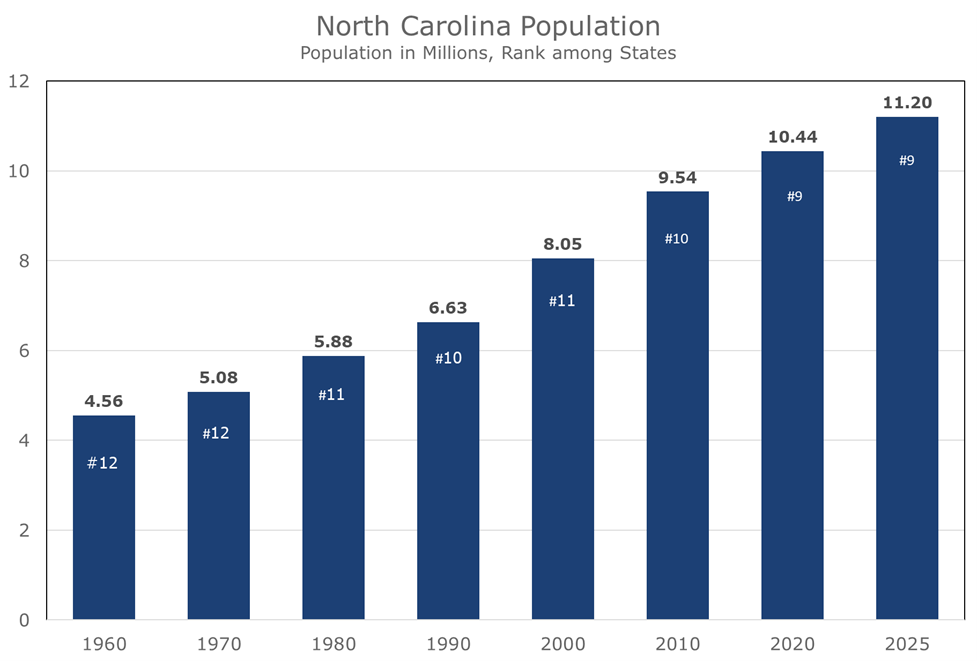
South Carolina is expected to approach 5.7 million residents over the same period and will likely surpass Minnesota by the end of this decade to become the nation’s 22nd-largest state. South Carolina should continue to benefit from its relative affordability and remain a top destination for retirees and job seekers alike. Growth will continue to aggregate to the familiar hot spots, such as Charleston, Greenville, and Myrtle Beach.
The Final Word The Carolina that James Taylor longed for has become a destination of choice for a nation on the move. As international migration slows, domestic migration and capital investment are doing the heavy lifting in reshaping the U.S. economic map. The Carolinas have assembled a rare combination: research depth, industrial scale, digital and logistics infrastructure, geographic flexibility, and lifestyle appeal.
That mix is not cyclical. It is structural and durable and will very likely define the remainder of this decade and well beyond
February 12, 2026
Mark Vitner, Chief Economist
Southeast Economic Advisors
704-458-4000