
Canals, Cotton, and Comebacks: The Economic Reinvention of Chester County, South Carolina
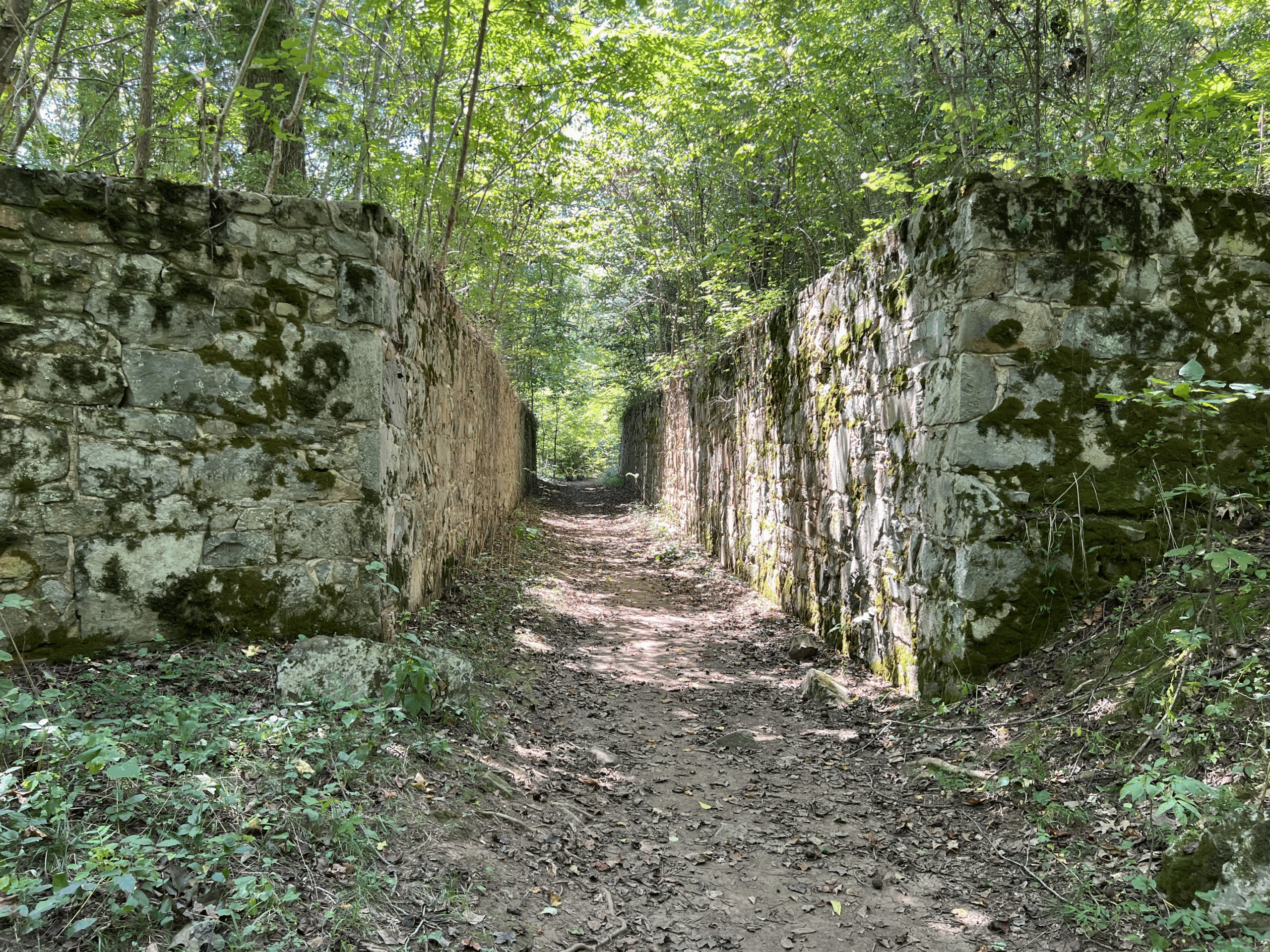
Two centuries ago, Chester County, South Carolina, embarked on an ambitious effort to modernize its economy. Construction of the Landsford Canal began in 1820, offering a manmade bypass around the rocky shoals of the Catawba River. It was part of a broader strategy to knit together the South’s inland regions with its coastal ports—especially Charleston—through internal navigation routes. Though the canal fell into disuse within a few decades, its creation symbolized a deeper trait still evident in Chester County today: an enduring belief that infrastructure can drive opportunity.
Fast forward to the present, and Chester County again finds itself at a pivotal juncture—this time not as a frontier of canal commerce, but as a resurgent manufacturing hub on the southern edge of the Charlotte metro. Urban-adjacent but still independent, Chester sits close enough to benefit from the region’s explosive growth, yet far enough to chart its own course.
From River to Rail: The Foundations of a Regional Economy
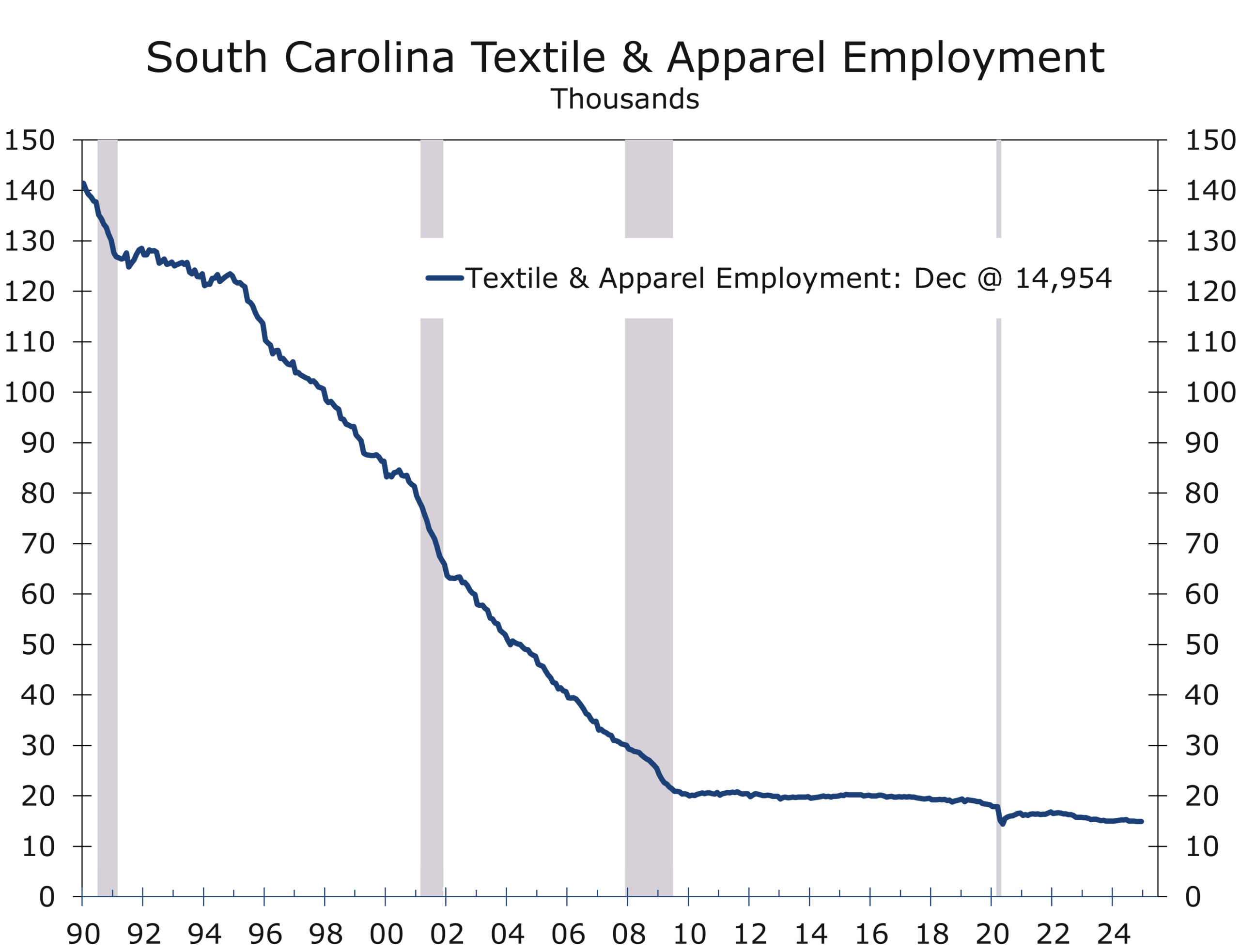
The Landsford Canal was born from a 19th-century economy built on cotton, timber, and agricultural trade. But as transportation evolved—from rivers to rail to highways—so too did Chester County. By the early 20th century, it had become firmly embedded in the Southern textile economy, thriving on millwork and industrial labor. Springs, Milliken, J.P. Stevens, Cone, and Avondale Mills all operated mills in Chester County.
That prosperity unraveled in the late 20th century. Global competition, automation, and offshoring gutted textile manufacturing across the South and particularly in the Carolinas. Yet Chester avoided full deindustrialization. It retained key infrastructure—rail lines, interstates, power capacity—and a manufacturing-savvy workforce. These assets would prove critical in the decades that followed.
Industrial Comeback: Urban Proximity Without the Sprawl
Chester’s reinvention has come not by mimicking suburban expansion but by leaning into its industrial identity. Positioned along I-77 between Charlotte and Columbia, the county offers affordable land, multimodal access, and efficient connections to the Port of Charleston.
That value proposition has drawn considerable investment in recent years:
- Giti Tire invested $560 million to build its first North American plant, which now produces more than a million tires annually. The facility has steadily added production lines and ramped up to around 1,000 workers today.
- E. & J. Gallo Winery invested more than $500 million to establish a bottling, packaging, and distribution facility now employing nearly 375 workers, with plans for further expansion.
- IKO Manufacturers is investing nearly $400 million to modernize a plant for producing fiberglass used in roofing shingles.
- Other major employers—Boise Cascade, Guardian Industries, Carolina Poly, and ATI Specialty Materials—have also expanded operations in the county.
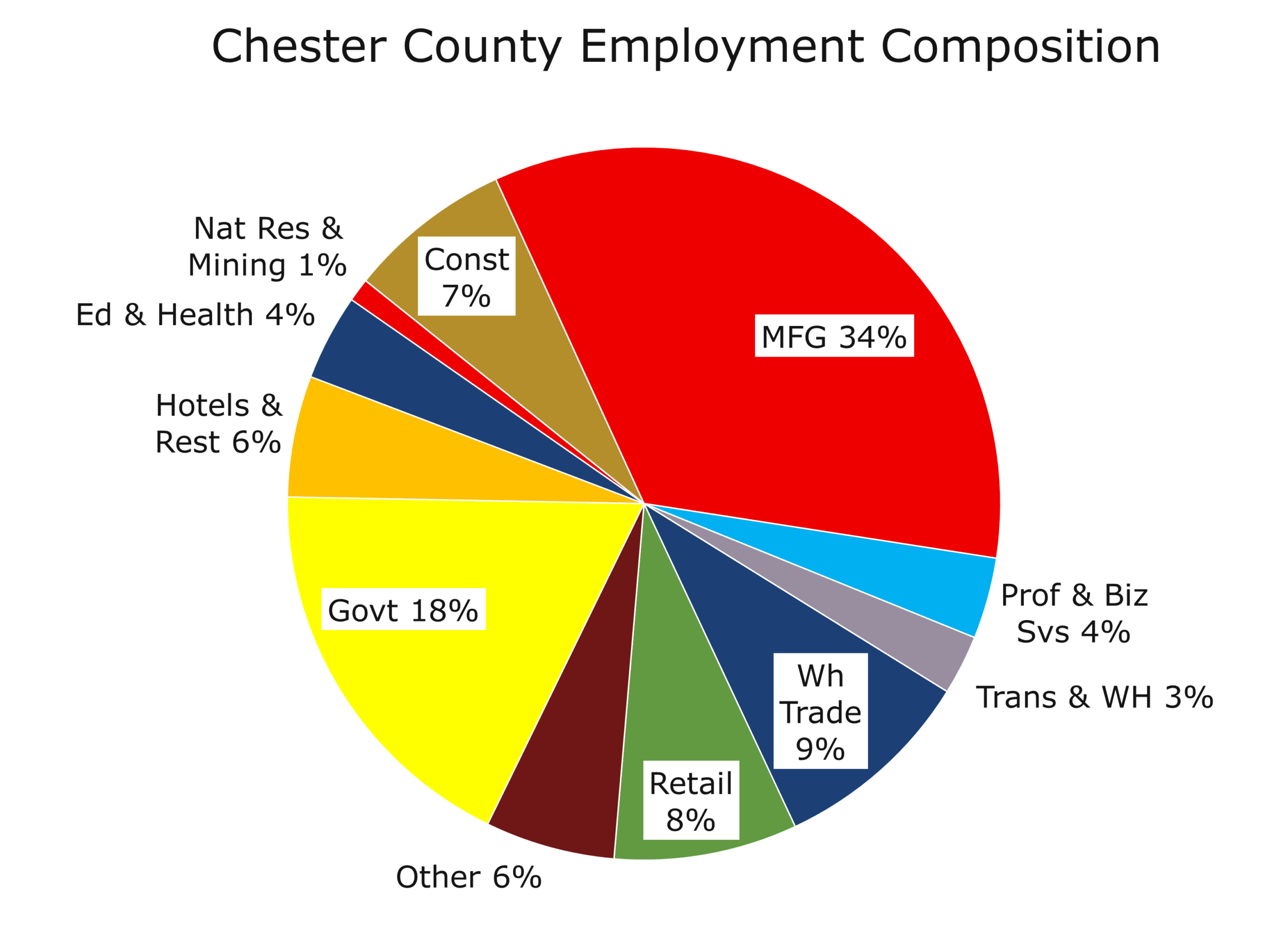
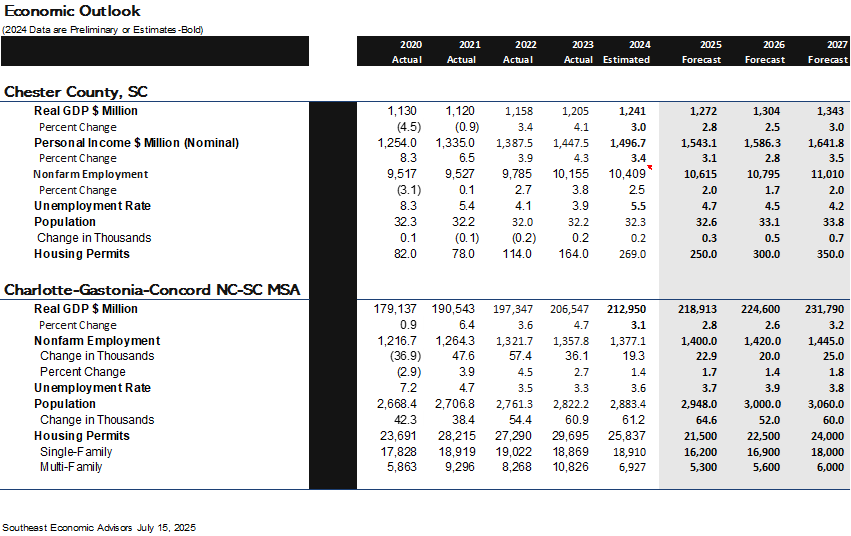
Today, manufacturing accounts for more than 34% of all jobs in Chester County, far outpacing the national average and exceeding many of its regional peers.
Population Trends Reverse Course
Chester’s population declined steadily from 2000 to 2020, even as neighboring York and Lancaster counties boomed. If you notice a resemblance to a certain region of Pennsylvania, it’s no coincidence. This part of South Carolina saw an influx of settlers from eastern Pennsylvania, who named their new hometowns after the ones they left behind.
After decades of sluggish growth, the region now appears poised for better days. Industrial development has sparked new housing construction, especially along the I-77 corridor. Builders are responding to renewed job demand and spillover from Charlotte. While official forecasts remain modest, early indicators suggest that Chester’s demographic narrative is being rewritten.
Charlotte’s Orbit—Without Its Overhead
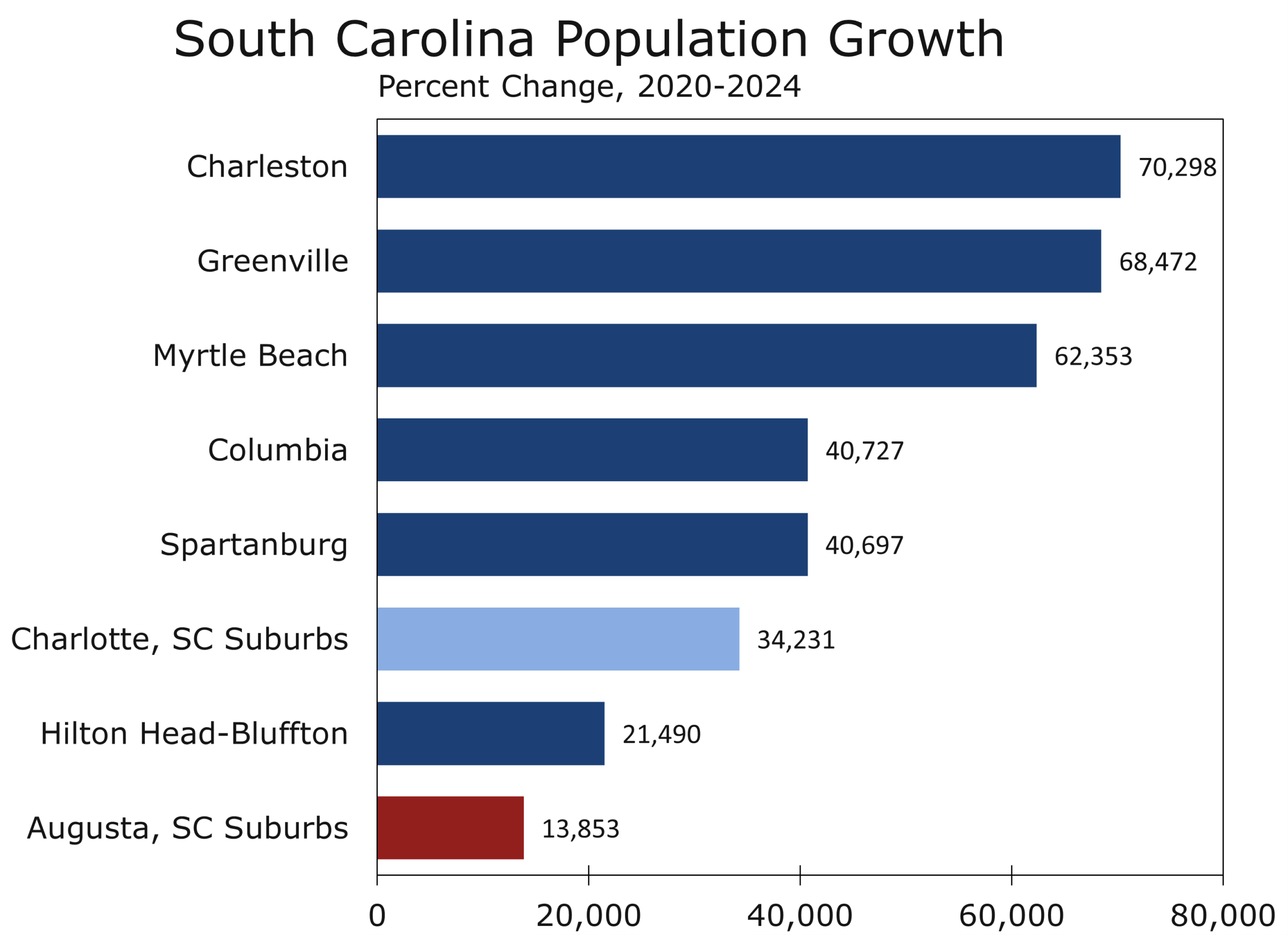
To the north, York and Lancaster counties have become textbook exurbs—home to corporate campuses, commuter subdivisions, retirement communities, and retail corridors. Charlotte’s South Carolina suburbs added more than 34,000 residents since 2020, slightly trailing Columbia and Spartanburg, with virtually all of that growth concentrated in York and Lancaster counties.
Chester offers something different. The county only recently became part of the Charlotte MSA and has seen little net population growth since the 2020 Census. It’s best described as urban-adjacent—a manufacturing-first, infrastructure-rich alternative with land to spare, with little of the premium pricing pressures found in areas closer to Charlotte.
As Charlotte’s costs continue to rise, Chester’s value proposition only strengthens. For firms in logistics, advanced manufacturing, and clean tech, the county offers scale, speed, and affordability—qualities increasingly scarce in core metro areas. The region also holds growing appeal as a more affordable housing option within the greater Charlotte economic sphere.
From Canal to Corridor: The Next Chapter
The Landsford Canal no longer moves goods, but its legacy endures. Chester has always believed in building its way to a better future—whether by canal, rail, highway, or fiber.
Its story isn’t one of explosive suburban growth, but of strategic reinvention on the edge of a booming metropolis. Chester’s arc—from canal town to tire-and-wine manufacturing hub—mirrors the broader trajectory of the South, shifting from agriculture to textiles to globally connected commerce.
As national industrial strategy reorients toward resilience, scale, and proximity, Chester County stands well positioned for the next chapter in its economic transformation.
Infrastructure’s Unexpected Legacy: A Sanctuary for the Spider Lily
While the Landsford Canal never fulfilled its commercial promise, its unintended ecological impact has proven far more enduring. By diverting navigation away from the rocky shoals of the Catawba River, the canal helped preserve one of the most extraordinary natural habitats in the Southeast. Today, Landsford Canal State Park is home to the world’s largest known stand of Hymenocallis coronaria—the Rocky Shoals Spider Lily.

Every May and June, the river erupts in a sea of white blossoms as the lilies bloom across the Catawba’s shallow, rocky rapids. These fragile plants require very specific conditions: clean, fast-moving water, rocky outcrops, and minimal human disturbance. Ironically, the canal’s early 19th-century engineering—by routing boats around rather than through the shoals—helped protect this delicate ecosystem from destruction.
It’s a rare example of industrial ambition leaving behind not just stonework and history, but a living, blooming legacy. The spider lilies have become a source of local pride, regional tourism, and environmental education—reinforcing Chester County’s identity as a place where nature and industry coexist, sometimes unexpectedly and often beautifully.
July 16, 2025
Mark Vitner, Chief Economist
Southeast Economic Advisors
704-458-4000